Showing posts with label green living. Show all posts

23 March 2014

Aquaponics Organic Pesticide


Neem oil
From Wikipedia, the free encyclopedia

Neem oil

Neem oil is a vegetable oil pressed from the fruits and seeds of the neem (Azadirachta indica), an evergreen tree which is endemic to the Indian subcontinent and has been introduced to many other areas in the tropics. It is the most important of the commercially available products of neem for organic farming and medicines.

Neem oil varies in color; it can be golden yellow, yellowish brown, reddish brown, dark brown, greenish brown, or bright red. It has a rather strong odor that is said to combine the odours of peanut and garlic. It is composed mainly of triglycerides and contains many triterpenoid compounds, which are responsible for the bitter taste. It is hydrophobic in nature; in order to emulsify it in water for application purposes, it must be formulated with appropriate surfactants.

Azadirachtin is the most well known and studied triterpenoid in neem oil. The azadirachtin content of neem oil varies from 300ppm to over 2500ppm depending on the extraction technology and quality of the neem seeds crushed. Neem oil also contains steroids (campesterol, beta-sitosterol,stigmasterol).


Neem fruit

The method of processing is likely to affect the composition of the oil, since the methods used, such as pressing (expelling) or solvent extraction are unlikely to remove exactly the same mix of components in the same proportions. The neem oil yield that can be obtained from neem seed kernels also varies widely in literature from 25% to 45%.

The oil can be obtained through pressing (crushing) of the seed kernel both through cold pressing or through a process incorporating temperature controls. Neem seed oil can also be obtained by solvent extraction of the neem seed, fruit, oil, cake or kernel. A large industry in India extracts the oil remaining in the seed cake using hexane. This solvent-extracted oil is of a lower quality as compared to the cold pressed oil and is mostly used for soap manufacturing. Neem cake is a by-product obtained in the solvent extraction process for neem oil.


Neem leaves and flowers

Neem oil is not used for cooking purposes. In India, it is used for preparing cosmetics (soap, hair products, body hygiene creams, hand creams) and in Ayurvedic, Unani and folklore traditional medicine, in the treatment of a wide range of afflictions. The most frequently reported indications in ancient Ayurvedic writings are skin diseases, inflammations and fevers, and more recentlyrheumatic disorders, insect repellent and insecticide effects.

Traditional Ayurvedic uses of neem include the treatment of acne, fever, leprosy, malaria, ophthalmia and tuberculosis. Various folk remedies for neem include use as an anthelmintic, antifeedant,antiseptic, diuretic, emmenagogue, contraceptive, febrifuge, parasiticide, pediculocide and insecticide. It has been used in traditional medicine for the treatment of tetanus, urticaria, eczema,scrofula and erysipelas. Traditional routes of administration of neem extracts included oral, vaginal and topical use. Neem oil has an extensive history of human use in India and surrounding regions for a variety of therapeutic purposes. Puri (1999) has given an account of traditional uses and therapeutic indications and pharmacological studies of this oil, in his book on neem.

Formulations made of neem oil also find wide usage as a biopesticide for organic farming, as it repels a wide variety of pests including the mealy bug, beet armyworm, aphids, the cabbage worm, thrips, whiteflies, mites, fungus gnats, beetles, moth larvae, mushroom flies, leafminers, caterpillars, locust, nematodes and the Japanese beetle. Neem oil is not known to be harmful to mammals, birds, earthworms or some beneficial insects such as butterflies, honeybees and ladybugs if it is not concentrated directly into their area of habitat or on their food source. It can be used as a household pesticide for ant, bedbug, cockroach, housefly, sand fly, snail, termite and mosquitoes both as repellent and larvicide. Neem oil also controls black spot, powdery mildew,anthracnose and rust fungi.

Neem seed oil has also been found to prevent implantation and may even have an abortifacient effect similar to pennyroyal, juniper berries, wild ginger, myrrh and angelica. The effects were seen as many as ten days after fertilization in rats though it was most effective at no more than three days. (Sinha, et al., 1984); (Lal et al., 1985). In a study on rats, neem oil was given orally eight to ten days after implantation of the fetus on the uterine wall. In all cases, by day 15, the embryos were all completely resorbed by the body. The animals regained fertility on the next cycle showing no physical problems. Detailed study of the rats revealed increased levels of gamma interferon in the uterus. The neem oil enhanced the local immune response in the uterus.(Mukherjee, 1996) Post coital use of neem oil as birth control does not appear to work by hormonal changes but produces changes in the organs that make pregnancy no longer viable (Tewari, 1989),(Bardham, 1991).

Neem seed oil has also been used as a renewable source for the preparation of polymeric coatings. It has been converted into various polymeric resins, including polyesteramides and polyetheramides. These resins may be utilized further for preparation of polyurethane coatings.

Neem tree

12 February 2014

Aquaponics Garden in your house - AquaLibrium


The Aqualibrium Garden is an indoor ecosystem designed to grow fresh herbs, vegetables, and flowering plants in any home.


  • Aquaponic and Hydroponic Gardening
  • Food Grade, BPA-Free Plastic
  • Adjustable for Larger Plants (e.g. Tomatoes)
  • Snap-on Aquarium Window Covers and LED Grow Lights Included
  • Beautiful Clear Design
  • Aquaponic/Hydroponic Instruction Manual Provided


Plants require nutrients to grow. Aquaponics uses a closed loop ecosystem composed of a fish tank and a garden. The fish produce the nutrients that are cycled up to feed the garden. The plant roots then act as a bio-filter by soaking up nutrients. Finally, the water is cycled back down to the aquarium, fresh and clean for the fish. 


All that is needed to grow peppers, kale and eggplants in your Aqualibrium Garden is a few small fish from your local pet store. The Aqualibrium Garden can also be used as a hydroponic system. Hydroponic gardening allows you to use pre-bottled nutrients instead of fish. Sprinkle nutrients in the bottom portion of the Aqualibrium Garden a few times a week and you will have a fresh herbs and flowers in no time!


http://www.aqualibrium.com/
  

24 June 2013

Permaculture + Aquaponics = Self Sustaining


By bringing Permaculture Design principles and practices into Aquaponics, we are closing many loops, inefficiencies, and energy drains that exist in more conventional systems, as well as integrating the system appropriately into the larger landscapes and ecologies it is a part of, making it a much more holistic and sustainable enterprise. 


Closed-Loop Aquaponics focuses on designing aquaponics systems that that produce as much of the system’s needs (water, energy, fish, feed, heat, gas, etc.) on-site and within the system itself as possible. 


Products of the systems can include; solar electricity, solar heated air, solar heated water, fish, prawns, vegetables, fruit, aquatic plants, algae, minnows, snails, worms, dry and liquid fertilizers, methane gas, and more. By using the Permaculture Design process, we learn to design systems appropriate to diverse climates and unique ecological niches to meet various needs, dreams, and desires.

08 June 2013

Aquaponics is Organic


Organic Grown Food
http://www.epa.gov/agriculture/torg.html

"Organically grown" food is food grown and processed using no synthetic fertilizers or pesticides. Pesticides derived from natural sources (such as biological pesticides) may be used in producing organically grown food.


Organic Farming
http://en.wikipedia.org/wiki/Organic_farming

Organic farming is a form of agriculture that relies on techniques such as crop rotation, green manure, compost and biological pest control. Organic farming uses fertilizers and pesticides but excludes or strictly limits the use of manufactured (synthetic) fertilizers, pesticides (which include herbicides, insecticides and fungicides), plant growth regulators such as hormones, livestock antibiotics, food additives, genetically modified organisms, human sewage sludge, and nanomaterials.

Organic agricultural methods are internationally regulated and legally enforced by many nations, based in large part on the standards set by the International Federation of Organic Agriculture Movements (IFOAM), an international umbrella organization for organic farming organizations established in 1972. IFOAM defines the overarching goal of organic farming as:

"Organic agriculture is a production system that sustains the health of soils, ecosystems and people. It relies on ecological processes, biodiversity and cycles adapted to local conditions, rather than the use of inputs with adverse effects. Organic agriculture combines tradition, innovation and science to benefit the shared environment and promote fair relationships and a good quality of life for all involved..."
—International Federation of Organic Agriculture Movements


Organic Products 
http://www.ams.usda.gov/AMSv1.0/getfile?dDocName=STELDEV3004446&acct=nopgeninfo

Organic products have strict production and labeling requirements. Unless noted below, organic products must meet the following requirements:
- Produced without excluded methods; genetic engineering, ionizing radiation, or sewage sludge.
- Produced per the National List of Allowed and Prohibited Substances (National List).
- Overseen by a USDA National Organic Program authorized certifying agent,
- Following all USDA organic regulations.

An overview of labeling the various categories of organic products is provided below.
PRINCIPAL DISPLAY PANEL: portion of the package most likely to be seen by customers at the time of purchase.
INFORMATION PANEL: includes ingredient statement (list of ingredients contained in a product, from highest to lowest percentage of final product) and other product information.


100% Organic
Raw or processed agricultural products in the “100 percent organic” category must meet these criteria:
- All ingredients must be certified organic.
- Any processing aids must be organic.
- Product labels must state the name of the certifying agent on the information panel.

An overview of labeling the various categories of 100% organic products is provided below.
PRINCIPAL DISPLAY PANEL: May include USDA organic seal and/or 100 percent organic claim.
INFORMATION PANEL: Must identify organic ingredients (e.g., organic dill) or via asterisk or other mark.


Normal Organic
Raw or processed agricultural products in the “organic” category must meet these criteria:
- All agricultural ingredients must be certified organic, except where specified on National List.
- Non-organic ingredients allowed per National List may be used, up to a combined total of five percent of non-organic content (excluding salt and water).
- Product labels must state the name of the certifying agent on the information panel.

An overview of labeling the various categories of normal organic products is provided below.
PRINCIPAL DISPLAY PANEL: May include USDA organic seal and/or organic claim.
INFORMATION PANEL: Must identify organic ingredients (e.g., organic dill) or via asterisk or other mark.

Organic Certification
http://en.wikipedia.org/wiki/Organic_certification

Organic certification is a certification process for producers of organic food and other organic agricultural products. In general, any business directly involved in food production can be certified, including seed suppliers, farmers, [food] processors, retailers and restaurants.

Requirements vary from country to country, and generally involve a set of production standards for growing, storage, processing, packaging and shipping that include:
  • no human sewage sludge fertilizer used in cultivation of plants or feed of animals
  • avoidance of synthetic chemical inputs not on the National List of Allowed and Prohibited Substances (e.g. fertilizer, pesticides, antibiotics, food additives, etc.), genetically modified organisms, irradiation, and the use of sewage sludge;
  • use of farmland that has been free from prohibited synthetic chemicals for a number of years (often, three or more);
  • keeping detailed written production and sales records (audit trail);
  • maintaining strict physical separation of organic products from non-certified products;
  • undergoing periodic on-site inspections.


06 June 2013

Aqua Vista Topic: Future of Farming #1


Looking at the past and current state of agriculture, we have come to the conclusion that it is failing to provide nutritious foods, it is insufficient to sustain us in the future and the ecological destruction caused my modern farming methods has taken an incredible toll on our planet. 


Dr. Despommier's solution is to utilize skyscrapers to grow food hydroponically in the middle of cities. According to Dr. Despommier, the vertical farm has a number of advantages over traditional agricultural methods used currently worldwide.

1. Year-round crop production. By growing crops inside controlled environments, crop production is not dependent upon the seasons. Instead of one season of tomatoes, staggered planted tomatoes can be harvested year round.

2. No Weather-related Crop Failures. By growing foods in controlled environments; droughts, floods, hurricanes, tornadoes and other natural phenomena are irrelevant. 

3. New Employment Opportunities. When farming exists in a skyscraper there are plenty of job opportunities created in the cities. In the Vertical Farm, the crops exist in all of these stages all the time, necessitating the need for labour.

4. No Agricultural Runoff. "According to the USDA, Agricultural nonpoint source pollution is the primary cause of pollution in the U.S." - The Vertical Farm. By growing hydroponically in a controlled environment, these toxic chemicals are essentially unnecessary.

5. Allowance for Ecosystem Restoration. By moving agriculture into city skyscrapers, Dr. Despommier argues traditional agriculture won't be necessary and the land can be turned back over to nature for recovery.

6. Animal Feed from Post-harvest Plant Material. You don't eat all parts of a plant and what is leftover can be used as animal feed.

7. No Use of Pesticides, Herbicides, or Fertilizers. Guess what? There are no weeds to pull in hydroponic/aeroponic/aquaponic systems! So there's no water pollution caused by this method of farming.

8. Use of 70-95 percent less water. According to The Vertical Farm, "Today, traditional agriculture uses around 70 percent of all the available freshwater on earth, and in doing so pollutes it." Of all the benefits on this list, this is the most important of them all.

9. Purification of Grey Water to Drinking Water. Grey water reclamation will become an even hotter topic as the scarcity of clean water becomes more desperate. Plants provide a natural (bio) filtration process that can cleans the water.

10. Greatly reduced food miles. A common argument for alternative farming is that the average distance food travels from farm to table is 1500 miles, on average. The Vertical Farm proposes growing food in the centre of cities, drastically cutting this distance down.

11. More Control of Food Safety and Security. The Vertical Farm is designed using the same equipment hospitals use in intensive care units to prevent pathogens and pests from affecting the crops. Security is proposed to prevent people from sabotaging the environment produced.

credit to OHIO AQUAPONICS

23 May 2013

Aquaponics + Farm Towers

Vertical Farms 
(credit to: http://www.verticalfarm.com )


Problem Statement

By the year 2050, nearly 80% of the earth's population will reside in urban centers. Applying the most conservative estimates to current demographic trends, the human population will increase by about 3 billion people during the interim. An estimated 109 hectares of new land (about 20% more land than is represented by the country of Brazil) will be needed to grow enough food to feed them, if traditional farming practices continue as they are practiced today. At present, throughout the world, over 80% of the land that is suitable for raising crops is in use (sources: FAO and NASA).


Potential Solution

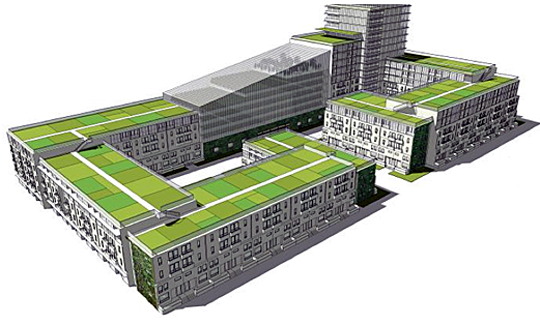
The concept of indoor farming is not new, since hothouse production of tomatoes, a wide variety of herbs, and other produce has been in vogue for some time. What is new is the urgent need to scale up this technology to accommodate another 3 billion people. An entirely new approach to indoor farming must be invented, employing cutting edge technologies. The Vertical Farm must be efficient (cheap to construct and safe to operate). Vertical farms, many stories high, will be situated in the heart of the world's urban centers. If successfully implemented, they offer the promise of urban renewal, sustainable production of a safe and varied food supply (year-round crop production), and the eventual repair of ecosystems that have been sacrificed for horizontal farming.

Vertical Farms' Advantages
  • Year-round crop production; 1 indoor acre is equivalent to 4-6 outdoor acres or more, depending upon the crop (e.g., strawberries: 1 indoor acre = 30 outdoor acres) 
  • No weather-related crop failures due to droughts, floods, pests 
  • All VF food is grown organically: no herbicides, pesticides, or fertilizers 
  • VF virtually eliminates agricultural runoff by recycling black water 
  • VF returns farmland to nature, restoring ecosystem functions and services 
  • VF greatly reduces the incidence of many infectious diseases that are acquired at the agricultural interface 
  • VF converts black and gray water into potable water by collecting the water of evapotranspiration 
  • VF adds energy back to the grid via methane generation from composting non-edible parts of plants and animals 
  • VF dramatically reduces fossil fuel use (no tractors, plows, shipping.) 
  • VF converts abandoned urban properties into food production centers 
  • VF creates sustainable environments for urban centers 
  • VF creates new employment opportunities 
  • We cannot go to the moon, Mars, or beyond without first learning to farm indoors on earth 
  • VF may prove to be useful for integrating into refugee camps 
  • VF offers the promise of measurable economic improvement for tropical and subtropical LDCs. If this should prove to be the case, then VF may be a catalyst in helping to reduce or even reverse the population growth of LDCs as they adopt urban agriculture as a strategy for sustainable food production. 
  • VF could reduce the incidence of armed conflict over natural resources, such as water and land for agriculture


Vertical Farms' Designs


Comment:
Farm Towers are nicely suited for Aquaponics system. The fish tanks would be located on the ground floor since it is where the sunlight is most deficient. The hydroponics will then occupy all the floors above it. Using minimal pumps, the water flow would be highly energy efficient since it travels back to the fish tank using gravity. In addition to that, the tower could also be energy independent if renewable energy sources such as wind and solar are tapped.

07 October 2012

Aquaponics Trial #2

Hey guys, its been a while.

Here's the second trial I've been doing at my house. Had the first prototype moved out of the shade plus additional 2 pods. Also added a fish tank i acquired from a fish store that's about to move out of town.


Actually these photos here are outdated by 2-3 months, since I've already started to harvest them from August. Anyway, here's a close-up of the pods.


I've been trying a lot of different kinds of vegetable; kailan, lettuce, salad, cabbage, sawi, etc. But the most success I've had so far is the kangkung (water spinach).


The two tanks shown are connected underneath; the right tank receives freshly filtered water from the pods. It has 9-10 lampam fish. The water then travel to the left tank (along with fish faeces), before being pumped to the highest pods to begin the cycle again.


24 April 2012

Aquaponics Presentation #2


BALANCING AN AQUAPONICS SYSTEM

There are several items that needs balancing in an aquaponics system 

1. Nitrate level ~ high: Nitrogen-eating bacteria converts Ammonia to Nitrate

2. Water pH level ~ 7.0 optimum 
3. Sodium salts concentration ~ low 
4. Iron (Fe) addition 
5. Fish feed 
   

BENEFITS OF AN AQUAPONICS SYSTEM
 
There are a lot of benefits of managing an aquaponics system, such as:

1. Conservation through constant water reuse and recycling 
2. Organic fertilization of plants with natural fish emulsion 
3. The elimination of solid waste disposal from intensive aquaculture 


4. The reduction of needed cropland to produce vegetable crops 
5. The overall reduction of environmental footprint for crop production 
6. Small efficient commercial installations can be built close to markets therefore reducing food miles


7. Small systems are easily setup and operated; thus everybody can try 
8. If many people in our country starts their own small aquaponics system at home;
            a) sell surplus harvest, good side-income source 
            b) use fresh food daily, increase in overall health 


Besides all the benefits and profits, one should be aware of its disadvantages, such as:
1. Initial expense to start an aquaponic project
2.The infinite number of ways to configure
3. Rely heavily on energy, technology & control
4. Have multiple 'single points of failure' where problems can lead to
complete loss of fish stock


***presentation continues into #3, refer older post***