Showing posts with label friendly. Show all posts

18 March 2014

Aquaponics & Mosquitoes - Lesson Learnt

credit to http://www.friendlyaquaponics.com/
from the post : Welcome to “The End of Malaria”


Are you irritated by mosquitoes in your neighborhood? Do you live in a location where malaria, elephantiasis, filariasis, dengue fever, or any of the other dangerous diseases carried by mosquitoes exist? Are you a health-care professional whose concern is these diseases and their control and eradication? If the answers to these questions interest you, please read on:

An additional benefit of farming aquaponically (that we noticed after our first system was operational for six months) was that the mosquitoes on our seven-acre farm had COMPLETELY disappeared! We live in Hawaii, where there are as many mosquitoes as any other tropical area in the world. Although we are fortunate not to have malaria, elephantiasis, filariasis, or any of the other dangerous diseases that are transmitted to humans by mosquitoes, we DO have dengue fever, which can be fatal in the young, elderly, or those with compromised immune systems.

Before we built our first aquaponics system, our farm was like any other place on the green windward coast of the Big Island: even during a drought, when the soil was dusty and dry and there was no standing water visible anywhere, there were still clouds of mosquitoes at dawn and dusk. If we left a door or window open in the house during the day, even for a few minutes, we knew that we would be tormented by the buzzing of hungry mosquitoes all night long as we tried to sleep. When we built our first aquaponics system, we knew we were creating additional habitat for mosquitoes to lay their eggs, so we introduced a few mosquito fish (gambusia affinis), and neon tetras into our system water.

They thrived and spread throughout the systems we built, and soon had become a self-sustaining population numbering in the tens of thousands. Six months later we noticed there were simply no mosquitoes around any longer. It’s easier to notice the presence of a pest than the absence of one, so we’re not certain when the number went to zero, but it was sometime during that six-month period. That was three years ago Since then, we’ve had the pleasure to live on a beautiful farm in the tropics that has NO mosquitoes! How does this work?

We live in the center of a deadly efficient mosquito trap: every female mosquito in the neighborhood can sense the roughly 50,000 gallons of water in our aquaponics systems, and comes to them to lay her eggs. Each egg hatches into a larva, which is then promptly consumed by one of the hundreds of thousands of mosquito fish in our water BEFORE it can ever develop sufficiently to hatch into an adult mosquito. That mosquito’s bequest of future generations is GONE, down the gullets of little fish who thrive on these meals and produce even MORE little fish hungry for mosquito larvae.

We don’t know what the effective radius of our mosquito eradicator is, but we’ve gone to the corners of our seven-acre property and haven’t found any mosquitoes there; we think there’s a good chance it is significantly reducing mosquito populations on the farms around us. We need help and funding to continue research into this phenomenon in order to understand it better, and to develop it to the point where it can easily be implemented in any location or culture.

This could make a huge difference in the lives of people worldwide who currently lose family members to malaria and other mosquito-borne diseases.
  

19 February 2014

Home garden, Home aquaponics

credit to http://quantitativemetathesis.blogspot.com/


Aquaponics Is the Next Generation Name for House Garden

We have all observed of veggie plants, kitchen landscapes and bought clean vegetables from the grocer's shops and observed about The Lawn of Arden. At some point of life most of us might have used veggie agriculture, be it in the property garden or portable pots but I think most of us have not tried Aquaponics yet. Aquaponics is a recent innovation in the field of agriculture and shall become another name for home landscapes in the days to come.


What is Aquaponics?

Aquaponics is the combination of hydroponics and aquaculture. Hydroponics is the method of growing vegetation in h2o or sand without the use of ground. Aquaculture is the agriculture of seafood. Aquaponics is the farming of both vegetation and seafood part by part. Fish is kept in an fish tank. The h2o made up of the toxic release by the seafood is sent to the hydroponic program through a pipe, where the vegetation utilize it to obtain their meals. The h2o becomes free from toxics and is sent returning to the aquaculture program.


Vegetables can be expanded in multiplexes

All types of clean vegetables flourish in the Aquaponics program. Cucumber green beans, clothes or chili peppers any veggie can be expanded inside your house. Aquaponics can be used both, outdoors or in the house. No area is needed and this decreases the cost significantly especially, in cities and places where area for agriculture is hardly available. People living in multiplexes can also grow their clean vegetables.
Aquaponics gives you clean and natural vegetables

Since the vegetation obtain their nutritional value from the seafood fertilizer, no substances or bug sprays are needed. This means you get clean and natural veggie for your your meal. You do not need to pay high costs or even visit the Grocery stores store. These self produced clean vegetables involve no appearance, rating, marketing and marketing, which are the reasons for the rise in the costs of products in shops.


Saves h2o efforts and energy

All you need is a continuous supply of meals for the seafood. Difficult and time consuming washing of the fish tank is also reduced. The vegetation obtain the nutritional value from the h2o containing the natural waste of the seafood. Most of the washing is done by the vegetation. The h2o becomes clean and is supplied returning to the fish tank. It helps you to save a lot of h2o too.


Easy accessibility to packages of different sizes

Aquaponics kit can be easily bought from plant centers, agriculture shops or via internet. Kits are available in different dimensions from huge tanks, to be used in verandas or mini ones for indoor preparations. The blooming bed too can be a huge tank or just a huge pail. Other necessary equipment is provided in the kit along with related information and training.


Relaxation of mind

Aquaponics gives an ultimate experience of staying close to nature in the grouped and disorderly places. The joy of eating self-cultivated meals is tremendous and no exotic supper at any cafe could ever meet it. It makes a relaxing green environment and gives pleasure to the brain. It can prove to be a treatment for many illnesses which owe their birth to stress and extremely stress.

20 October 2013

Aquaponics' Applications [1]


Educational Applications of Aquaponics
credit to Nelson Pade website


Aquaponics and hydroponics are both excellent means of demonstrating many principles of science, agriculture, math and business in all grade levels and for home schooling. Applications of these technologies are only limited by ones imagination.


A unit in hydroponics or aquaponics enforces practical uses of chemistry, mathematics, physics, economics and engineering. The monitoring and care of a hydroponic or aquaponic system by students helps instill a sense of responsibility, inspires creativity and creates excitement in the learning environment.


A small aquaponic garden can sit on a counter top and be used to demonstrate botany, horticulture, hydroponics (soil less plant culture), plant science, nutrition, physiology and care, nutrient and pH testing, pH relationships, plant usage of nutrients, seed germination, photosynthesis and light and plant development.


An aquaponic system combines hydroponics with aquaculture in a recirculating system. In addition to the plant sciences, aquaponics incorporates and demonstrates many of natures natural cycles, nitrification, biology, fish anatomy and nutrition and high-tech agriculture.


A unit in hydroponics or aquaponics can be started at the beginning of a semester and run through the entire semester, allowing the educator to present the individual concepts and lessons as the plants and fish develop and grow. A small hydroponic or aquaponic system can sit on a spare counter top. Larger systems can be placed on the floor of a classroom, in a windowsill or a greenhouse.
  

08 October 2013

Different Types of Aquaponics Systems


There are three different types of aquaponics systems that have been developed for use by home gardeners and commercial enterprises. These are media based, NFT and Deep Flow or Raft systems and here is a description of each one.


Media-based: also known as the gravel bed system, the media-based aquaponics system is the simplest type to set up and can be used on a small or large scale. This is why it is the type most commonly used by backyard aquaponics enthusiasts. Containers are filled with small rocks, usually expanded clay pebbles which are porous to absorb water and air, and then seedlings are planted directly into these. Water from the fish tank is circulated through the container to allow the plants to access the nutrients. The rocks act as a biological filter as well as a solids filter, eliminating the need for extra equipment.

You can also use special netted growing pots for your seeds or seedlings. You fill these with perlite, coir, peat moss or the clay pebbles and plant into them. These pots are then placed into a larger container which has been filled with the expanding clay pebbles, making sure the netted sides are covered by the media. Media-based aquaponics systems hold plants firmly and so are ideal for growing fruiting plants.

There are two different ways this type of aquaponics system can be operated. The first method pumps a continuous flow of water through the media bed from the fish tank and back into the tank. The second is a process called flood and drain or ebb and flow, where water is pumped into the bed to a depth of about 10 to 12 inches (20 to 30 cms) and then drained away. A timer controls the flooding and draining sequence.


NFT system: or Nutrient Film Technique is a common method used in hydroponics that is best suited to a large-scale aquaponics production. This is because of the expense of setting up the system of PVC pipes and mechanical filtration needed to operate the system. Because there is not the surface area exposed to the air, as in the media-based system, a biological filter is needed to allow the beneficial bacteria to develop and convert the fish wastes into plant nutrients. Solids filtration is also needed to deal with the solids in the fish waste; this is usually set up in a separate tank through which the water passes before going through the plant pipes.

In the NFT system, plants are held in netted growing pots which are suspended through holes cut in the pipe. A thin film of nutrient-rich water is run along the bottom of enclosed gutters so that the roots can reach it. It is really only suited to plants that have a small root systems, such as leafy green vegetables.


Deep Flow: also called Deep Water Culture (DWC) or the Raft system, this is another commonly-used method in hydroponics. This system involves the use of a foam ‘raft’ that floats on top of the water. It is a popular choice for both commercial and backyard aquaponics because it is relatively cheap to set up and operate.

A container or channel is used to hold the water as it is pumped through from the fish tank, after it has been filtered to remove any solid waste. Plants are held in holes made in the raft, so their roots dangle down into the water. This method uses high volumes of water which provides stable water temperatures for the plants and fish. It is the method most often used in commercial aquaponics operations because of the ease with which the plants can be tended and harvested. Again, it is better suited to growing herbs and leafy green vegetables than plants with bigger root systems and fruiting varieties.

This type of system can easily be adapted for home garden use by simply floating a styrofoam tray on top of a fish tank. Just cut holes in the tray and suspend the plants, or plants in netting pots, through the holes so the roots are in contact with the water. Choose fish varieties that are not voracious plant eaters to avoid having plants’ roots eaten away.

Now that you understand how each of the 3 types of aquaponics systems operates, you will be in a better position to decide which one suits you the best. Whichever method you choose, it is best to start small so you can gradually build your expertise and experience before setting up a large system.


24 June 2013

Permaculture + Aquaponics = Self Sustaining


By bringing Permaculture Design principles and practices into Aquaponics, we are closing many loops, inefficiencies, and energy drains that exist in more conventional systems, as well as integrating the system appropriately into the larger landscapes and ecologies it is a part of, making it a much more holistic and sustainable enterprise. 


Closed-Loop Aquaponics focuses on designing aquaponics systems that that produce as much of the system’s needs (water, energy, fish, feed, heat, gas, etc.) on-site and within the system itself as possible. 


Products of the systems can include; solar electricity, solar heated air, solar heated water, fish, prawns, vegetables, fruit, aquatic plants, algae, minnows, snails, worms, dry and liquid fertilizers, methane gas, and more. By using the Permaculture Design process, we learn to design systems appropriate to diverse climates and unique ecological niches to meet various needs, dreams, and desires.

17 June 2013

Aquaponics' Advantages - Commercially

credit to http://centerforaquaponics.com

Aquaponic systems possess many attractive commercial applications, as well as environmental and human health benefits, making them ideal for future use in developing regions of the world. Quantifiable results include:


• Additive water conservation benefits of recirculating aquaculture and hydroponics combined into an integrated waste free system. With uncertainty regarding water supplies and the population carrying capacity of arid regions of the world, water conservation practices may result in aquaponics replacing more traditional forms of food production. Additionally, the plant and microbial remediation of the fish effluent (waste) prevents environmental contamination (eutrophication) common with many forms of aquaculture.


• A controlled-environment greenhouse operation greatly increases the reliability of production while reducing the risk of environmental degradation such as non-native species introduction which is prevalent with other forms of agriculture. Through the prevention of greenhouse pest outbreaks the need for synthetic pesticides has been eliminated.


• Combining aquaculture and hydroponics technologies has demonstrated the potential to exceed the productivity and profitability of independently operated systems for a given resource constraint (land, water, capital).


• Unlike warm blooded food stocks, cultured aquatic species are not considered high probability vectors of zoonotic diseases to humans. They require fewer inputs (feed and time) than other livestock. The feed conversion ratio and carbon footprint for farmed fish is significantly less than other sources for animal protein.


• The technologies employed to run an aquaponics operation can be primitive and produced from a large range of readily available (post-consumer) materials. This lowers the overall environmental footprint of the design and broadens the availability of the technology to poorer regions of the world.

08 June 2013

Aquaponics is Organic


Organic Grown Food
http://www.epa.gov/agriculture/torg.html

"Organically grown" food is food grown and processed using no synthetic fertilizers or pesticides. Pesticides derived from natural sources (such as biological pesticides) may be used in producing organically grown food.


Organic Farming
http://en.wikipedia.org/wiki/Organic_farming

Organic farming is a form of agriculture that relies on techniques such as crop rotation, green manure, compost and biological pest control. Organic farming uses fertilizers and pesticides but excludes or strictly limits the use of manufactured (synthetic) fertilizers, pesticides (which include herbicides, insecticides and fungicides), plant growth regulators such as hormones, livestock antibiotics, food additives, genetically modified organisms, human sewage sludge, and nanomaterials.

Organic agricultural methods are internationally regulated and legally enforced by many nations, based in large part on the standards set by the International Federation of Organic Agriculture Movements (IFOAM), an international umbrella organization for organic farming organizations established in 1972. IFOAM defines the overarching goal of organic farming as:

"Organic agriculture is a production system that sustains the health of soils, ecosystems and people. It relies on ecological processes, biodiversity and cycles adapted to local conditions, rather than the use of inputs with adverse effects. Organic agriculture combines tradition, innovation and science to benefit the shared environment and promote fair relationships and a good quality of life for all involved..."
—International Federation of Organic Agriculture Movements


Organic Products 
http://www.ams.usda.gov/AMSv1.0/getfile?dDocName=STELDEV3004446&acct=nopgeninfo

Organic products have strict production and labeling requirements. Unless noted below, organic products must meet the following requirements:
- Produced without excluded methods; genetic engineering, ionizing radiation, or sewage sludge.
- Produced per the National List of Allowed and Prohibited Substances (National List).
- Overseen by a USDA National Organic Program authorized certifying agent,
- Following all USDA organic regulations.

An overview of labeling the various categories of organic products is provided below.
PRINCIPAL DISPLAY PANEL: portion of the package most likely to be seen by customers at the time of purchase.
INFORMATION PANEL: includes ingredient statement (list of ingredients contained in a product, from highest to lowest percentage of final product) and other product information.


100% Organic
Raw or processed agricultural products in the “100 percent organic” category must meet these criteria:
- All ingredients must be certified organic.
- Any processing aids must be organic.
- Product labels must state the name of the certifying agent on the information panel.

An overview of labeling the various categories of 100% organic products is provided below.
PRINCIPAL DISPLAY PANEL: May include USDA organic seal and/or 100 percent organic claim.
INFORMATION PANEL: Must identify organic ingredients (e.g., organic dill) or via asterisk or other mark.


Normal Organic
Raw or processed agricultural products in the “organic” category must meet these criteria:
- All agricultural ingredients must be certified organic, except where specified on National List.
- Non-organic ingredients allowed per National List may be used, up to a combined total of five percent of non-organic content (excluding salt and water).
- Product labels must state the name of the certifying agent on the information panel.

An overview of labeling the various categories of normal organic products is provided below.
PRINCIPAL DISPLAY PANEL: May include USDA organic seal and/or organic claim.
INFORMATION PANEL: Must identify organic ingredients (e.g., organic dill) or via asterisk or other mark.

Organic Certification
http://en.wikipedia.org/wiki/Organic_certification

Organic certification is a certification process for producers of organic food and other organic agricultural products. In general, any business directly involved in food production can be certified, including seed suppliers, farmers, [food] processors, retailers and restaurants.

Requirements vary from country to country, and generally involve a set of production standards for growing, storage, processing, packaging and shipping that include:
  • no human sewage sludge fertilizer used in cultivation of plants or feed of animals
  • avoidance of synthetic chemical inputs not on the National List of Allowed and Prohibited Substances (e.g. fertilizer, pesticides, antibiotics, food additives, etc.), genetically modified organisms, irradiation, and the use of sewage sludge;
  • use of farmland that has been free from prohibited synthetic chemicals for a number of years (often, three or more);
  • keeping detailed written production and sales records (audit trail);
  • maintaining strict physical separation of organic products from non-certified products;
  • undergoing periodic on-site inspections.


06 June 2013

Aqua Vista Topic: Future of Farming #1


Looking at the past and current state of agriculture, we have come to the conclusion that it is failing to provide nutritious foods, it is insufficient to sustain us in the future and the ecological destruction caused my modern farming methods has taken an incredible toll on our planet. 


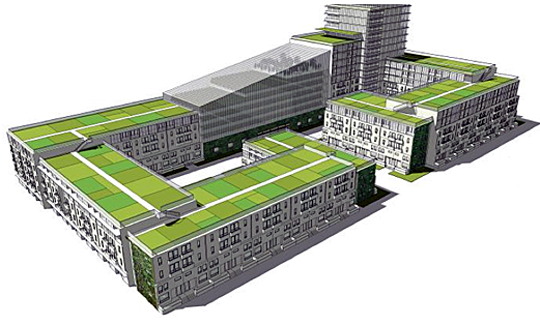
Dr. Despommier's solution is to utilize skyscrapers to grow food hydroponically in the middle of cities. According to Dr. Despommier, the vertical farm has a number of advantages over traditional agricultural methods used currently worldwide.

1. Year-round crop production. By growing crops inside controlled environments, crop production is not dependent upon the seasons. Instead of one season of tomatoes, staggered planted tomatoes can be harvested year round.

2. No Weather-related Crop Failures. By growing foods in controlled environments; droughts, floods, hurricanes, tornadoes and other natural phenomena are irrelevant. 

3. New Employment Opportunities. When farming exists in a skyscraper there are plenty of job opportunities created in the cities. In the Vertical Farm, the crops exist in all of these stages all the time, necessitating the need for labour.

4. No Agricultural Runoff. "According to the USDA, Agricultural nonpoint source pollution is the primary cause of pollution in the U.S." - The Vertical Farm. By growing hydroponically in a controlled environment, these toxic chemicals are essentially unnecessary.

5. Allowance for Ecosystem Restoration. By moving agriculture into city skyscrapers, Dr. Despommier argues traditional agriculture won't be necessary and the land can be turned back over to nature for recovery.

6. Animal Feed from Post-harvest Plant Material. You don't eat all parts of a plant and what is leftover can be used as animal feed.

7. No Use of Pesticides, Herbicides, or Fertilizers. Guess what? There are no weeds to pull in hydroponic/aeroponic/aquaponic systems! So there's no water pollution caused by this method of farming.

8. Use of 70-95 percent less water. According to The Vertical Farm, "Today, traditional agriculture uses around 70 percent of all the available freshwater on earth, and in doing so pollutes it." Of all the benefits on this list, this is the most important of them all.

9. Purification of Grey Water to Drinking Water. Grey water reclamation will become an even hotter topic as the scarcity of clean water becomes more desperate. Plants provide a natural (bio) filtration process that can cleans the water.

10. Greatly reduced food miles. A common argument for alternative farming is that the average distance food travels from farm to table is 1500 miles, on average. The Vertical Farm proposes growing food in the centre of cities, drastically cutting this distance down.

11. More Control of Food Safety and Security. The Vertical Farm is designed using the same equipment hospitals use in intensive care units to prevent pathogens and pests from affecting the crops. Security is proposed to prevent people from sabotaging the environment produced.

credit to OHIO AQUAPONICS

11 June 2012

Aquaponics and Worms

Credit to Vermiaquaponics article by Great Lakes Aquaponics
http://greatlakesaquaponics.wikispaces.com/Vermiaquaponics

How to Breed Worms for Fishing thumbnail


Vermiaquaponics is actually a word my father and I invented. It is in laymans terms the same thing as aquaponics but with a combination of worm breeding. You use the worm castings to make a nutrient tea which is then used to feed the plants through their roots directly and in the form of foliar feeding. Foliar feeding is when you feed a plant through its leaves. You spray the tea onto the leaves directly and the goal is to have the nutrients be absorbed in more than one way. Then the worms themselves are used to feed the fish thus eliminating some of the cost of fish feed, and making these aquaponic systems more self sustainable.

Vermiaquaponics will soon become the future of aquaponics. In a way many people use certain aspects of it by feeding their plants with extra micronutrients and such.(for example chelated iron, manganese, zinc, etc) But what makes this version so unique is that it will help eliminate the cost of fish feed which becomes an enormous expense. In addition you are feeding your fish great protein which should theoretically help them to grow faster and bigger. Although worms do not give fish 100% of their diet, and are nearly 90% composed of water, so supplements will be required. So essentially your getting your fish wish less cost improving your profit. 


One concern I have about this new form of growing is when it gets to the commercial scale. Places like the University of the Virgin Islands are harvesting over 5 tons of fish annually and in order for something like this to be beneficial to them you would need a very vast number of worms. Making vermiaquaponics less practical on a commercial scale but definately beneficial on the hobby scale. Something to consider if trying to convert from aquaponics to vermiaquaponics is that you will need the space to grow your worms, and to make sure you will have enough worms to be able to integrate this technology into aquaponics.

The focus on vermiaquaponics is to not incorporate it in systems producing such high quantities of fish. For the Urban Farmer, primary focus should be on plant growth in order to make profit. Using as little fish as possible and supplementing with tea will reduce other costs. The key is to get the right number of fish to plant growth ratio and also adding the vermiaquaponics side of the equation. When all these numbers can be worked out maximum plant growth to cost can be achieved giving you maximum profit.

24 April 2012

Aquaponics Presentation #1

Hi, its been long since I posted. And guess what I found while going through my previous semesters paperwork; an aquaponic presentation I (and a collegue of mine) did back in 2008! Here is some of its content.


INTRODUCTION

Terminology     :  Spelled                      : aqua·pon·ics
                          Pronunciation            : [ak-wuh-pon-iks]

                        : noun (used with a singular verb)
                        : origin: 1996-97; aqua(culture) + (hydro)ponics
                        : symbiotic cultivation of plants and aquatic animals in a recirculating environment

Brief explanation           : 

  1. Fish waste accumulates in water as a byproduct of the keeping them in a closed-tank aquaculture system. The waste rich water becomes high in plant nutrients but is toxic to the aquatic animal.
     2.  Plants are grown in a hydroponic system that utilizes the nutrient rich water. The plants in turn digest the nutrients, reducing or eliminating the waters toxicity for the aquatic animal.

  1. The water, now clean, is returned to the aquatic animal environment and the cycle continues. Aquaponics systems do not discharge or exchange water.
The systems rely on the natural relationship between the aquatic animals and the plants to maintain the environment.
  

COMPONENTS OF AN AQUAPONICS SYSTEM

     Fish Tank                   Vegetable Plot                 Water Pump

       
      Filter                                 Piping                         Sump


PRODUCTS OF AN AQUAPONICS SYSTEM

              Fresh Fish 

             Fresh Vegetables


***presentation continues into #2, refer older post***