Showing posts with label commercial. Show all posts

09 September 2014

Aquaponics Grow Media

credit to : Farm Tech Mart
link : http://farmtech-mart.com/grow_media


Although there is no soil in a hydroponic garden, the plants must still be anchored. There is a wide range of inert materials which can be used to support plant roots and we call them "growing mediums". Clay Pellets, Perlite, Vermiculite, Coconut Fiber and Rockwool are the most popular media. The hydroponic media that work best are pH neutral, provide ample support for plants, retain moisture, and allow space for good air exchange. The type of media you choose will depend on the size and type of plants you wish to grow, and the type of hydroponic system being used. 


1. Clay Pebbles (LECA) 


Expended Clay Aggregate pebbles (LECA) main use is as a hydroponic growing media in flood and drain and dripper hydroponics systems like the Wilma. Clay pebbles can also be mixed with other hydroponic growing media like Cellmax, Coco or Soil to give better aeration. To create better drainage when growing in pots add a layer of Clay pebbles in the bottom.

Many growers use clay pebbles as a hydroponic growing media because they have excellent aeration and drainage properties. Clay pebbles are a clean, ph stable, and can be reused a couple of times before they need to be replaced.


Flood and drain or a dripper system will deliver the fast growth rates and yields using clay pebbles.


The centre of a clay pebble is honeycomb to make it light weight and the outside of a clay pebble is covered in a thin layer of solid clay making them suitable for use in hydroponics.

Tired of looking at dirty soil on the top of house plants in pots why not use some clay pebbles to make it look more attractive.


2. Perlite


Good old perlite! It's been around for years, mainly for use as a soil additive to increase aeration and draining of the soil. Perlite is a mined material, a form of volcanic glass that when rapidly heated to more than 1600 deg. f. it pops much like popcorn as the water vaporizes and makes countless tiny bubbles.

Perlite is one of the best hydroponic growing mediums around. Used by itself or as a mixture with other mediums. Perlite is commonly used with vermiculite ( a 50 - 50 mix is a very popular medium), and is also one of the major ingredients of soiless mix's. Perlite has good wicking action which makes it a good choice for wick-type hydroponic systems. Perlite is also relatively inexpensive.

The biggest drawback to perlite is that it doesn't retain water well which means that it will dry out quickly between waterings. The dust from perlite is bad for your health so you should wear a dust mask when handling it.


3. Vermiculite 

Vermiculite is another mined material. In it's natural state it resembles mica rock, but when quickly heated it expands due to the generation of interlaminar steam.

Vermiculite is most frequently used in conjunction with perlite as the two complement each other well. Vermiculite retains moisture (about 200% - 300% by weight), and perlite doesn't so you can balance your growing medium so that it retains water and nutrients well but still supplies the roots with plenty of oxygen. A 50/50 mix of vermiculite and perlite is a very popular medium for drip type hydroponic systems as well as ebb and flow systems. Vermiculite is inexpensive.


The major drawback of vermiculite is that it retains too much water to be used by itself. It can suffocate the roots of plants if used straight.


4. Coconut Fiber 


Coconut fiber is rapidly becoming one of the most popular growing mediums in the world. In fact it may soon be THE most popular. It is the first totally "organic" growing medium that offers top performance in hydroponic systems. Coconut fiber is essentially a waste product of the coconut industry, it is the powdered husks of the coconut itself.

There are many advantages - it maintains a larger oxygen capacity than rockwool, yet also has superior water holding ability than rockwool which is a real advantage for hydroponic systems that have intermittent watering cycles.

Coconut fiber is also high in root stimulating hormones and offers some protection against root diseases including fungus infestation. Dutch growers have found that a mixture of 50% coconut fiber and 50% expanded clay pellets is the perfect growing medium.


One word of caution about coconut fiber, you must be careful when you purchase coconut fiber. There is a commonly available, lower grade of coconut fiber that is high in sea-salt and is very fine grained. Lower grade coconut fiber will lead to disappointing results when used in a hydroponic system.


5. Rockwool


Rockwool is a very popular hydroponics growing medium. Rockwool is a porous substance that forms when a mixture of rocks, mostly basalt and dolomite, is melted at high temperature and specially processed. Given the material's neutral nature, it is used to build plant-growing medium granules or slabs, blocks, plugs, cubes, etc.

Rockwool provides roots with a good balance of water/oxygen As rockwool is composed of 97% air, it is easy to control the air/water ratio in it. Its porous quality also enhances root growth.
. Small cubes are used for starting seeds and cuttings, 3" or 4" cubes for small plants or intermediate growth, and slabs for larger plants. Rockwool can be used with continuous drip or flood and drain systems. Although it is possible to sterilize and re-use Rockwool, most often it is used only once.

More than 95% of all greenhouse vegetable production is carried out with the help of Rockwool -and for good reason. Like mentioned before, rockwool allows control over air and water supply, which are essential factors for plant growth. It also provides other feasible conditions to support a great crop, leading to consistency in plant production and yield, which is an important consideration in commercial harvesting.


Another pro is the easy availability of Rockwool products in a variety of shapes and sizes. This promotes the maximum utilization of Rockwool in various types of hydroponic set-ups.


05 March 2014

Aquaponics as a Business opportunity

How to Start your own Aquaponics Business at Home
credit to http://www.aquaponicsandyou.com/

With many people looking for ways to increase their income these days, starting a home-based business is an attractive option. There are several major hurdles to clear before you can start earning any money from a new enterprise, not the least of which is funding. Many new businesses need a huge injection of capital before any return can be realised and this factor alone prevents many from getting off the ground. An aquaponics business is the exception.

Unlike most other types of business, setting up an aquaponics farm does not cost hundreds of thousands of dollars. While the actual set-up cost obviously varies depending on the size of the system, experts claim that most investors can expect to see a return in a relatively short period of time. Some claim it is possible to have the whole system paid off in a twelve month period.

Aquaponic farming combines aquaculture and hydroponics. Fish are kept in a tank and the water from the tank is pumped through the plants and back into the tank, in a continuous process. Aquarium water is rich in nutrients because of the waste products expelled by the fish and it is these nutrients that the plants take up and use to grow. The water that is returned to the fish tank has been purified by the plants; this keeps the tank water clean and healthy for the fish.

The types of plants that are grown in an aquaponics farm are generally herbs and vegetables. Because they are not treated with fertilizers and the usual garden chemicals, they are considered to be organic produce. The fish you buy to stock your tanks can be eating varieties and this gives you another product to sell. Both the fish and the vegetables grow at the same time, using the same system. Organic produce attracts a premium price at point of sale and is keenly sought by consumers.

The main advantages of starting an aquaponics farm as a business include the low start-up costs, low production costs and the ease with which the system can be managed. You don’t need to rent or buy any space to carry out your business as you can use space in your own yard, garage or other parts of your home. Organic produce is becoming a popular product, especially at farmers’ markets and other local events, so selling your product should be quite easy.

If you are looking for ways to bring in extra money or you want to start your own business, take a close look at how to start your own aquaponics business. You don’t need to be a gardener and you don’t need any specialised skills to succeed in this type of enterprise.


Commercial Aquaponics and Profitability
credit to http://www.greenacreaquaponics.com/

The commercial viability of aquaponics is likely the hottest contested topic on most aquaponic forums today and is the million dollar question that everyone wants answered. While I’m still not willing to make my financial data public (you would be amazed how many people have asked), I will say that we are indeed a profitable farm based on revenue generated by the farm alone. Although our farm’s revenue is derived in diverse ways, even after extracting any non farm related revenue from things such as consulting, education or system sales, our Green Acre farm is indeed profitable on it’s farm generated merits alone. So it then begs the question, why have alternate streams of revenue if farming alone can be profitable? For several reasons. Let’s take a look at each one.

Reason 1 - A business with multiple revenue streams is a more viable, resilient business model. Having multiple revenue streams means a business can be more nimble and weather setbacks more easily. Literally. Setbacks from the weather are a very real possibility and probability for any kind of farming venture unless you farm in a controlled environment setting but even in controlled ag, crop losses can occur due to pest damage or disease. However having multiple streams can help insure there is still cash flow when a crop loss occurs. This is especially important for the aquaponic farmer as crop insurance isn’t yet an option. 

Reason 2 - Direct farm generated revenue from crops is rarely a consistent amount and alternate streams can supplement in between crop harvests and rotations. This actually is probably a little less true in aquaponic farming then in traditional Ag where all of a farms revenue might come in a two month period when the watermelons are ready to harvest. For we aquaponic farmers though, a carefully planned crop schedule and rotation can help insure a constant and consistent harvest of some crops such as lettuce and herbs but even the revenue generated by these will fluctuate with the weather and season.

Reason 3 - Alternate streams of revenue can subsidize a small farm business while it grows its operation to a size large enough to generate enough revenue on farm sales alone.Ah, now this is the ultimate goal for us and most likely for most aquaponic farming hopefuls; have a farm large enough to pay all the bills and then some. It’s not that the farm is unsuccessful or not profitable right now but its simply not large enough yet to produce enough revenue to support two individuals entirely. Understand though that this is purely a function of not having enough start up or expansion capital for a small farm business to create a large enough farm right out of the gate. However, just because a farm’s revenue is limited due to grow space and production does not mean it’s not a profitable business.

Reason 4 - Alternate revenue streams can self fund farm growth and expansions. Lets face it, expanding an aquaponic farm can be pricey and certainly more then its soil counterpart. Have we stumbled on the one drawback of aquaponics? Perhaps, but I will save that discussion for another blog but adding on additional grow space can easily incur a capital outlay of $20k or more or as little as $15 a square foot just for the system or as much as $100 a square foot depending on how you build and source it. We would have to sell an awful lot of lettuce to fund expanding our farm from direct farm sales. Quite honestly, this is the single greatest driver for our alternate streams because our goal is to have enough grow space for the farm alone to support itself and us and so far 100% of our expansion has been self funded from alternate revenue streams.

25 February 2014

How to Write a Business Plan

credit to http://www.startupdonut.co.uk/

Writing a business plan

Many potential start-up businesses are daunted by the prospect of writing a business plan. But it is not a difficult process - and a good business plan focuses the mind as well as helping to secure finance and support.

The business plan will clarify your business idea and define your long-term objectives. It provides a blueprint for running the business and a series of benchmarks to check your progress against. It is also vital for convincing your bank - and possibly key customers and suppliers - to support you.

This briefing explains:
  • What information to include.
  • How to present your financial forecasts.

1 Executive summary

The executive summary outlines your business proposal. Although it is the last section to be written, it goes on the first page of the business plan. It will be read by people unfamiliar with your business, so avoid jargon.

1.1 The executive summary highlights the most important points and shouldsum up six areas.
  • Your product or service and its advantages.
  • Your opportunity in the market.
  • Your management team.
  • Your track record to date.
  • Financial projections.
  • Funding requirements and expected returns.

1.2 When deciding whether to back a start-up, bank managers and investors often make provisional judgements based on the executive summary.
The main body of the business plan is then read to confirm the initial decision. The appendices at the back of the plan carry detailed information to support the main text.


2 The business

2.1 Explain the background to your business idea, including:
  • The length of time you have been developing the business idea in its present form.
  • Work carried out to date.
  • Any related experience you have.
  • The proposed ownership structure of the business.

2.2 Explain, in plain English, what your product or service is. Make it clear how:
  • it will stand out as different from other products or services
  • your customers will gain through buying your product or service
  • the business can be developed to meet customers' changing needs in the future

It is important to cover any disadvantages or weak points you feel the business may have. Be frank about these - it inspires confidence.

2.3 Explain any key features of the industry (eg special regulations, effective cartels or major changes in technology).


3 Markets and competitors

3.1 Focus on the segments of the market you plan to target - for example, local customers or a particular age group.
  • Indicate how large each market segment is and whether it is growing or declining.
  • Illustrate the important trends - and the reasons behind them.
  • Outline the key characteristics of buyers in each segment (eg age, sex or income).
  • Mention customers you have already lined up and any sales you have already achieved.

3.2 What are the competing products and who supplies them?
  • List the advantages and disadvantages of all your competitors and their products.
  • Explain why people will desert established competitors and buy from you instead.
  • Show you understand your competitors' reaction to losing business and demonstrate how you will respond to it.

Unless there is a viable market and you know how you are going to beat the competition, your business will be vulnerable.

You must show you have done the market research needed to justify what you say in the plan.


4 Sales and marketing

This section is crucial. It often gives a good indication of the business' chances of success.

4.1 How will your product or service meet your customers' specific needs?

4.2 How will you position your product?

  • This is where you show how your price, quality, response time and after-sales service will compare with competitors.
  • Quote minimum order figures, if appropriate.

4.3 How will you sell to customers?

  • For example, by phone, through your website, face-to-face or through an agent.
  • Show how long you predict each sale will take. Many new businesses underestimate the time involved in winning each order. In year one you may spend up to 80 per cent of your time making contacts and selling.
  • Will you be able to make repeat sales? If not, it will be hard to build up volume.

4.4 Who will your first customers be?

  • Show which customers have expressed an interest or promised to buy from you and the sales they represent.
  • How will you identify potential customers?
Unless you can demonstrate that you have a clearly defined pool of potential customers, starting your business is likely to be a struggle.

4.5 How will you promote your product? For example, using advertising, PR, direct mail or via email and a website.

4.6 What contribution to profit will each part of your business make?

  • Most businesses need more than one product, more than one type of customer and more than one distribution channel.
  • Look at each in turn. Examine your likely sales, gross profit margins and costs.
  • Identify where you expect to make your profits and where there may be scope to increase either margins or sales.
Services and intangible products (eg computer software) are more difficult to market. Start-ups in these areas must pay special attention to marketing in their business plans.


5 Management

People reading the business plan need to be given an idea of why they should have faith in the management of your start-up.

5.1 Outline the management skills within your team.
  • Define each management role and who will fill it.
  • Show your strengths and outline how you will cope with any weaknesses.
  • Describe the background and experience of each team member.
  • Clarify how you intend to cover the key areas of production, sales, marketing, finance and administration.
  • Management information systems and procedures should be outlined. For example, management accounts, sales, stock control and quality control.
  • Show how many 'mentors' and other supporters you will have access to.

5.2 How committed are you?
Banks and any other potential investors will want to be sure you are committed to the business. Show how much time and money each of the management team will contribute, and what your salaries and benefits will be.


6 Operations

Explain what facilities the business will have and how it will deliver the product or service to the customer.

6.1 Show the pros and cons of the location.

6.2 Indicate the facilities you will need to start (eg equipment and machinery). Some start-up businesses only need a desk and a phone.
Consider any potential limits to production capacity.

If you are going to manufacture or distribute products, show how and where you are going to warehouse them and for how long.

6.3 Provide a list of employee roles you need to fill and the skills required to fill them.

6.4 Show how you selected your suppliers.

Keep it real

Sales forecasts produced for start-up businesses are often over-optimistic. Here are some important reality checks.
  • How soon can you start selling?
  • Will potential customers hold off for a year before they take you seriously and place an order?
  • How often will you be able to sell?
  • How many days can you spend selling?
  • How long will each lead take to line up?
  • What percentage of leads will turn into sales?
  • How much will you be able to sell?
  • What will the average sale value be?
  • Will most people give repeat orders, or must you find new customers each time?
  • How long after a sale will it be before you can collect payment?
  • How much income can you realistically expect each month?


7 Financial forecasts

Your financial forecasts translate what you have already said about your business into numbers.

7.1 A realistic sales forecast forms the basis for all your other figures.
Break the total sales figure down into its components (eg different types of products or sales to different types of buyer).

7.2 Your cashflow forecast shows how much money you expect to be flowing into and out of your bank account and when. You must show that your business will have access to enough money to survive.

  • Demonstrate that you have considered the key factors affecting cashflow - eg level and timing of sales revenue, wages.
  • Show when there will be more money coming in than going out ('cash-positive').

7.3 Your profit and loss (P&L) forecast gives a clear indication of how the business will move forward. Summarize the annual P & L forecast for each of the first two or three years of trading.

7.4 If you are launching a larger start-up, you will also need projected balance sheets.

These will show you the financial state of your business on day one and at year end, perhaps for the first two or three years.

7.5 Do not get too protective about your forecasts. You may need to revise them.

For every forecast, list all your key assumptions (eg prices, sales volume, timing). Small business advisers at banks and your local business support organisation will often help you put together your forecasts free of charge.


8 Financial requirements

The cashflow forecast will show how much finance the business needs. Your assessment of the risks will determine whether or not you need to arrange contingency financing.

8.1 Say how much finance you will want, when and in what forms.

For example, you might want a fixed-interest loan and an overdraft facility.

8.2 State what the finance will be used for.
Show how much will be for buying equipment and how much for working capital (financing stock and debtors).

8.3 Confirm that you will be able to afford it.


9 Assessing the risks

9.1 Look at the business plan and isolate areas where something could go wrong (eg if your main supplier closes down).
What you would do if it actually happens?

9.2 Consider a range of what-if scenarios (eg what happens to your cashflow if sales are 20 per cent lower or 15 per cent higher than forecast). If there are serious risks:

  • you can arrange contingency funding to cover the finance you may need
  • you may decide that the business is too risky and abandon the whole project.
Assessing risk will help you minimise problems and help build up your credibility with any investor or bank.


10Appendices

10.1 Detailed financial forecasts (monthly sales, monthly cashflow, P&L) should usually be put in an appendix.
Include a detailed list of assumptions.

For example, the profit margin on each product, debtor collection period, creditor payment period, stock turn, interest and exchange rates, equipment purchases.

10.2 You may want to give other relevant information.
  • Detailed CVs of key personnel (essential if you are seeking outside funding).
  • Market research data.
  • Product literature or technical specs.
  • Names of target customers.
  • A list of external data sources used in your research will add credibility to the information.


11 Presenting the plan

The more solid information you can gather for your own use, the better the business plan will be. But a banker or other outsider will not have time to read through all the details.

11.1 Keep your business plan short.
Most business plans are too long. Focus on what the reader needs to know.

11.2 Make it professional.

  • Put a cover on the business plan and give it a title.
  • Include a contents page.

11.3 Test it.

  • Re-read it yourself. Would reading your plan give an outsider a good feel for your business and a grasp of the key issues?
  • Show the plan to friends and expert advisers and ask them for comments.

22 October 2013

What food can be grown in Aquaponics

PLANTS
credit to Endless Food Systems


Naturally, different plants grow under different conditions. Before you get started growing, it’s important to consider which type of growing bed to use. This is determined by the type of root structure that plant tends to have. Plants with no root structure need floating beds, while root vegetables grow better in wicking beds. Most everything else grows best in media beds. 

For plants like lettuce, herbs or leafy greens, floating “raft” style beds are ideal. For root vegetables, wicking beds are a better choice. If you plan to grow tomatoes, peppers, beans or most other types of multiple yield plants, media beds are probably your best option.

Choosing the right environment in which to place your aquaponics farm is another important consideration. The amount of sunlight, ambient temperature, rainfall and wind are all crucial factors in producing a healthy plant. If you decide to grow outdoors, choose varieties of vegetables that will grow best in your climate. In addition, most areas will require the use of a greenhouse, or you can always grow indoors.

It is best to avoid fighting Mother Nature. Even with a greenhouse, it is difficult to control the temperature, and plants thrive better when the temperature ranges match their normal processes. Therefore, in the colder months you should grow cold-weather crops and in the summer, you should grow your warm-weather plants.

It’s important to carefully schedule your planting times. If you’re looking to produce a sustained food supply, you should stagger your projected harvests so that all of your produce doesn’t become ripe at one time. This can lead to wasted food, as well as in-between periods where your aquaponics garden isn’t producing any vegetables. If you plan to grow multiples of the same vegetable, try to stagger growing periods by approximately the amount of time it will take you to consume a batch.

If you are aiming for more variety in your diet, try overlapping the growing times of three or more vegetable types. It can take a while to fine-tune this process to match your own consumption and the decomposition rates of your already picked vegetables. To err on the side of overproduction is never a bad idea, as you can easily donate excess vegetables, share them with friends or preserve them for later by freezing, dehydrating or canning. 

One of the quickest-yield vegetables you can get out of an aquaponics system is lettuce. Reaching peak maturity at around 28 days, lettuce grows ideally in floating beds. It is very forgiving in terms of the minimum and maximum water temperatures and can survive a range from 25-85 degrees Fahrenheit. 

If you’re looking to produce a more nutritious food in a short amount of time, pole, an Italian-style wax bean, can be harvested in around 54 days. Pole grows best in a media bed and is optimal at temperatures between 59 and 95 degrees Fahrenheit. Beans overall are an excellent investment, as they can be dried and stored for very long periods of time. 

Tomatoes are well worth the wait, taking around three months to reach peak maturity depending on the strain and variety. Like beans, they grow best in a media bed at a temperature of 59-95 degrees Fahrenheit. In order to ensure the highest yield from your tomato plants, be sure to trim off all shoots, leaving just the main vine. This will ensure that the bulk of the plant’s nutrients are delivered to the tomatoes once they begin to form. 

In about 65 days, you can have a full harvest of delicious carrots. They have a very well defined optimal growing temperature, at between 59 and 64 degrees Fahrenheit, although they are capable of growing in extreme temperatures in both directions. Wicking beds provide the perfect growing environment for carrots and other root vegetables.

With an aquaponics system, your ability to grow edible plants is limited only by your own desire to do so. The system does most of the labor that would be required of you in an ordinary in-ground growing operation, so you can spend your time on more pressing issues like scheduling harvests and finding new and interesting applications for your crops. When done correctly, you should be able to maintain a constantly rotating supply of organic, pesticide-free vegetables that can carry on indefinitely in a properly maintained system. 


FISH
credit to Backyard Aquaponics


There are many different species of fish that can be used in an aquaponic system, depending on your local climates and available supplies. Our local climate in Perth, Western Australia, allows us to keep Rainbow Trout through winter, then a warmer species like Barramundi during summer. There are also a few choices for year round fish that we could grow, but they often take a longer time to mature. If you live in a cooler climate you might be looking at growing Trout all year round, or perhaps another locally produced fish species. In warmer areas of Australia people generally grow Barramundi, or Jade Perch year round, in most warm areas throughout the world Tilapia is the fish of choice.

In deciding what is the best species for you to grow, you should take a few factors into account, most importantly is what you want from your system. If you don’t want to eat your fish then you probably won’t want to grow edible fish, or you may want to grow an edible fish that can live year-round in your area, so that you’re not having to harvest fish out seasonally. The second most important factor is ‘What’s available?’ You need to be able to buy fish to stock your system, even with species such as Tilapia that breed readily, you need to get your broodstock in the first place.

Here’s a list of useful aquaponic species with a few details about each

Barramundi: Barramundi are often grown in aquaponic systems through the warmer months of the year. Most growers will buy fairly mature stock so that they can harvest larger fish, at the end of the growing season. Barramundi that is grown in an aquaponic system has an exceptionally clean, crisp taste. Growing your own Barramundi excites guests and is the envy of neighbours. They provide a decent harvest at the end of the season and are one of the more majestic species of edible fish.

Catfish: There are many different species of catfish around the world that are well suited to aquaponics. Channel catfish are the most widely farmed aquaculture species in the United States, and they are available in many areas of Australia. Catfish don’t have scales so they need to be skinned, they are quick growing and have a good food conversion ratio.

Carp: There are many species of carp that could be very well suited to aquaponics, unfortunately because of their reproductive capabilities, their tough nature and ability to readily adapt in many areas of the world, carp have become noxious pests to native waterways and the environment, and as such they are not easily obtainable, and often there are high fines and fees for keeping them. In most western cultures carp also have a fairly poor reputation, as an eating fish, however, carp is still the most widely cultured fish in the world as it’s grown throughout most of Asia.

Goldfish: Although some people may group these with the carp, I’ve decided to cover these seperately as most people refer to them as goldfish, and this is what they will be sold as, at local pet shops or fish suppliers. Goldfish are generally pretty tough and make a great addition to an aquaponic system. In many areas they will breed in a tank, although they generally need plant cover within the tank to breed.

Jade Perch: This Australian fish is worth a special mention here, as it has the highest levels of omega three oils of any fish species in the world. In fact it’s so high in omega three oils that growers are trying to breed the oil out of them, they are trying to breed a less oily fish because they’ve found people don’t like the high oil content. They require warm water and consume an omnivorous diet. Very well suited to an aquaponic system, they grow quickly and fingerlings are readily available in warmer areas.

Koi: Once again, another species of carp, but better known as “Koi” rather than carp. Koi are very common within many Asian communities and they are often found in large ornamental ponds. For those who love Koi, an aquaponic system is a great proposition for stocking the fish.

Murray cod: Murray cod are a magnificent native Australian fish, known to grow to enormous sizes in their native habitats, their tank culture is still in reasonably early days. Murray cod are grown in recirculating aquaculture systems, and can also been grown in aquaponic systems, hopefully this fish will be utilised more over time because they are quick growing, and a great eating fish. One of the downfalls is that they must be kept at high stocking densities, and kept well fed otherwise they cannibalise each other.

Silver perch: Silver perch are a good allround native Australian fish that grow well under a variety of conditions. Perch are omnivorous and will happily eat green scraps as well as Duckweed and Azolla. They grow within a wide temperature range, though they’re not as fast growing as many other fish, taking 12-18 months for fingerlings to grow to plate size.

Tilapia: The second most cultured fish in the world, and extremely popular in Aquaponics systems. They are an ideal species for aquaponics for many reasons. They are easy to breed, fast growing, withstand very poor water conditions, consume an omnivorous diet and are good eating. The only downfall for some people will be that Tilapia require warm water. If you live in a cool area you are far better off growing a fish species that will grow well in your temperature range, rather than trying to heat the water. Tilapia are also a declared pest in many areas.

Trout: Trout are a great fish for aquaponic systems where water temperatures are a little cooler. Trout prefer water temperatures between 10°C and 20°C. They have extremely fast growth rates and excellent food conversion ratios.

Others: There are other fish species which are quite suitable for aquaponics, that might be available in your local area. In Europe many different species of carp are grown, within the United States such species as Bluegill are often available, while in Australia we also have a number of other native species like Sleepy cod which would be suitable.

Other aquatic animals that can be incorporated into an aquaponic system are fresh water mussles, fresh water prawns, and fresh water crayfish. Mussles are a filter-feeder, and do a great job of helping to clean the water, they will happily grow in flooded grow beds, or can be incorporated into fish tanks. Crustaceans make a nice addition to an aquaponic system and there are a few different species available depending on your location and water temperatures.

For those in tropical areas there’s Redclaw, a fast growing  Australian species, and for those in cooler areas there’s Yabbies or Marron.

Yabbies breed readily, given the right environment and the correct water temperature, as well as long daylight hours. They also grow fairly quickly, but they can be prone to fighting and cannibalism when stocked very densely.


06 October 2013

How Aquaponics Makes Food Right

Credit to http://www.thecoolist.com

Aquaponics — The farms of the future are growing today. In a valley in the Virgin Islands, in a warehouse in Chicago, on a rooftop in Florida and a greenhouse in Milwaukee, history’s newest and most sustainable form of agriculture has broken out of its seed and has began to take root. In these farms of the future, you’ll find no waste water, no eroding soil and no harsh insecticides, but a mutually-balanced ecosystem that yields fast-growing organic produce– and the freshest, toxin-free fish money can buy. This is aquaponics, a high tech farming technology where vegetables and fish are grown in concert, a next generation symbiotic system that just might change the way we grow, harvest and eat the food of tomorrow.


1. The University of the Virgin Islands: Where the science began


After decades of scientific research, the team at the University of the Virgin Islands successfully grew fish and vegetables in a closed loop system that they ultimately called “Aquaponics”. Aquaponics is a hybrid technology including “aquaculture”, the raising of fish in a controlled system, and “hydroponics”, the farming of plants in a soil-free environment. Both techniques had survived for centuries before being merged, with hydroponics reaching back all the way to the hanging gardens of Babylon, where raised troughs of nutrient-rich water fed plants that hung and cascaded to the grounds below. Aquaculture is a newer technology, most commonly known as “fish farming”, where schools of fish are raised in controlled environments both in the seas and on land.

Both aquaculture and hydroponics produce toxic waste that ultimately harms the environment. In aquaculture, fish produce natural waste that is high in ammonia, resulting in water that must be discarded to maintain the health of the fish. In hydroponics, nutrient solutions degrade in quality and the waste water must be removed from the system or else it will harm the plants. When merged, aquaculture and hydroponics cancel out each other’s waste, providing a closed-loop system where the plants live off the fish waste and the fish live in water purified by the plants. In these aquaponic systems, humans can imitate the precise balance of nature to yield tons of fresh produce and healthy fish with very little effort.


2. Will Allen’s “Growing Power” Urban Farm, Milwaukee, WI


One of the champions of this new food movement is Will Allen, owner of the Growing Power urban farm in Milwaukee, Wisconsin. Allen has built a series of greenhouses that use aquaponic technology to raise 10,000+ lake perch and over a 1,000,000 pounds of produce every year. By using their own compost to heat the greenhouses, Growing Power runs year round, making them what might be the most productive year-round farm in the Midwest.

The secret to Growing Power, and many other aquaponic farms, is the vertical nature of their farming practice. Using multiple raised beds that stretch toward the roofs of each greenhouse, farmers can multiply the yield that traditional farmers could expect from a flat land investment. A single pump lifts the nutrient-rich water from the fish tanks to top level growing beds. This water feeds these plants and then cycles down to lower levels before falling back into the fish troughs below.

What makes Will Allen’s achievement so remarkable is that he has grown over 1,000,000 pounds of produce and 10,000 pounds of fish in just a few acres. It is an achievement that has inspired hobbyist and commercial growers alike, and has earned Allen a myriad of awards from some of the most prestigious grant organizations in the world. Allen has received a leadership grant from the Ford Foundation, a Genius Grant from the MacArthur Foundation and another from the Kellogg Foundation. In the world of aquaponics, this humble son of sharecroppers from South Carolina has risen to the most recognizable force in the world of future farming.


3. John Edels “The Plant” Warehouse, Chicago, IL


Not far from Growing Power in Milwaukee, another eco-entrepreneur has taken to the empty warehouses of Chicago’s meat-packing district to produce a new kind of edible product. Amidst a slew of slaughterhouses in every direction, John Edel and his company, “The Plant” yield pristine produce of the vegetative kind. Edel uses advanced LED grow lights to give life to his photosynthetic friends, lettuces and herbs grown in concert with fish. As in other aquaponic systems, fish waste in ammonia form is lifted throughout a series of plant beds, where naturally-occurring bacteria transform that ammonia into nitrites and then nitrates, a rich substance that feeds his produce.

Edel’s plan is to prove that empty warehouse space in cities around the world are ripe territory for future farming. Entrepreneurs like John can occupy this space and apply new age technology to farm vast amounts of food in limited space. Even with sunlight taken out of the equation, farmers can use aquaponic technology to raise produce and protein without breaking soil or wasting the water lost in traditional agriculture.


4.  Green Sky Growers: The Future of Farming


Not far from Orlando, Florida, an organic orange farmer and a biologist with Epcot Center experience have teamed up to build the true farm of the future. On a rooftop above their city center, Green Sky Growers use aquaponics and vertical farming to grow massive yields of produce and fresh, healthy tilapia using less than 10% of the water needed for traditional farming. As much a science lab as a farm, this facility uses a software-controlled greenhouse that ventilates based on local temperature, rotating plant towers that soak up solution from fish tanks, and happy tilapia that consume plant waste to produce nutrient-rich water.

A myriad of vegetables grow in this greenhouse year-round, where lettuces, herbs, peppers, tomatoes, cucumbers and more grow in a hydroponic setting while aquaculture tanks complete a biological closed-loop. Every Saturday, their produce is made available at a farmer’s market on the streets below in Winter Garden, Florida, inviting interested foodies up for a tour of the facility. Technology is everywhere in this farm, but the plants it yields are as organic as can be. No pesticides, genetic modifiers or toxic waste occur in this new-aged farm. It is the perfect marriage of technology and nature, where the people who run it understand the delicate balance between sensible agriculture and sustainable business. Visitors to the Orlando area might find more inspiration and fun in this rooftop farm than they would at the area’s entertainment district, where Mickey and Minnie Mouse dominate the environment.


02 July 2013

Aquaponics' Origin


Aquaponics, with its fancy name, may sound like a trendy new concept developed by environmentalists. But it's actually as old as the hills.


The origins of aquaponics can be traced to ancient Egyptian and Aztec cultures.


The ancient Aztecs developed chinampas, man-made floating islands, which consisted of rectangular areas of fertile land on lake beds.


Aztecs cultivated maize, squas­h and other plants on the chinampas and fish in the canals surrounding them.


The fish waste settled on the bottom of the canals, and the Aztecs collected the waste to use as fertilizer.


Additionally, countries in the Far East like Thailand and China have long used aquaponic techniques in rice paddies.

08 June 2013

Aquaponics is Organic


Organic Grown Food
http://www.epa.gov/agriculture/torg.html

"Organically grown" food is food grown and processed using no synthetic fertilizers or pesticides. Pesticides derived from natural sources (such as biological pesticides) may be used in producing organically grown food.


Organic Farming
http://en.wikipedia.org/wiki/Organic_farming

Organic farming is a form of agriculture that relies on techniques such as crop rotation, green manure, compost and biological pest control. Organic farming uses fertilizers and pesticides but excludes or strictly limits the use of manufactured (synthetic) fertilizers, pesticides (which include herbicides, insecticides and fungicides), plant growth regulators such as hormones, livestock antibiotics, food additives, genetically modified organisms, human sewage sludge, and nanomaterials.

Organic agricultural methods are internationally regulated and legally enforced by many nations, based in large part on the standards set by the International Federation of Organic Agriculture Movements (IFOAM), an international umbrella organization for organic farming organizations established in 1972. IFOAM defines the overarching goal of organic farming as:

"Organic agriculture is a production system that sustains the health of soils, ecosystems and people. It relies on ecological processes, biodiversity and cycles adapted to local conditions, rather than the use of inputs with adverse effects. Organic agriculture combines tradition, innovation and science to benefit the shared environment and promote fair relationships and a good quality of life for all involved..."
—International Federation of Organic Agriculture Movements


Organic Products 
http://www.ams.usda.gov/AMSv1.0/getfile?dDocName=STELDEV3004446&acct=nopgeninfo

Organic products have strict production and labeling requirements. Unless noted below, organic products must meet the following requirements:
- Produced without excluded methods; genetic engineering, ionizing radiation, or sewage sludge.
- Produced per the National List of Allowed and Prohibited Substances (National List).
- Overseen by a USDA National Organic Program authorized certifying agent,
- Following all USDA organic regulations.

An overview of labeling the various categories of organic products is provided below.
PRINCIPAL DISPLAY PANEL: portion of the package most likely to be seen by customers at the time of purchase.
INFORMATION PANEL: includes ingredient statement (list of ingredients contained in a product, from highest to lowest percentage of final product) and other product information.


100% Organic
Raw or processed agricultural products in the “100 percent organic” category must meet these criteria:
- All ingredients must be certified organic.
- Any processing aids must be organic.
- Product labels must state the name of the certifying agent on the information panel.

An overview of labeling the various categories of 100% organic products is provided below.
PRINCIPAL DISPLAY PANEL: May include USDA organic seal and/or 100 percent organic claim.
INFORMATION PANEL: Must identify organic ingredients (e.g., organic dill) or via asterisk or other mark.


Normal Organic
Raw or processed agricultural products in the “organic” category must meet these criteria:
- All agricultural ingredients must be certified organic, except where specified on National List.
- Non-organic ingredients allowed per National List may be used, up to a combined total of five percent of non-organic content (excluding salt and water).
- Product labels must state the name of the certifying agent on the information panel.

An overview of labeling the various categories of normal organic products is provided below.
PRINCIPAL DISPLAY PANEL: May include USDA organic seal and/or organic claim.
INFORMATION PANEL: Must identify organic ingredients (e.g., organic dill) or via asterisk or other mark.

Organic Certification
http://en.wikipedia.org/wiki/Organic_certification

Organic certification is a certification process for producers of organic food and other organic agricultural products. In general, any business directly involved in food production can be certified, including seed suppliers, farmers, [food] processors, retailers and restaurants.

Requirements vary from country to country, and generally involve a set of production standards for growing, storage, processing, packaging and shipping that include:
  • no human sewage sludge fertilizer used in cultivation of plants or feed of animals
  • avoidance of synthetic chemical inputs not on the National List of Allowed and Prohibited Substances (e.g. fertilizer, pesticides, antibiotics, food additives, etc.), genetically modified organisms, irradiation, and the use of sewage sludge;
  • use of farmland that has been free from prohibited synthetic chemicals for a number of years (often, three or more);
  • keeping detailed written production and sales records (audit trail);
  • maintaining strict physical separation of organic products from non-certified products;
  • undergoing periodic on-site inspections.


06 June 2013

Aqua Vista Topic: Future of Farming #1


Looking at the past and current state of agriculture, we have come to the conclusion that it is failing to provide nutritious foods, it is insufficient to sustain us in the future and the ecological destruction caused my modern farming methods has taken an incredible toll on our planet. 


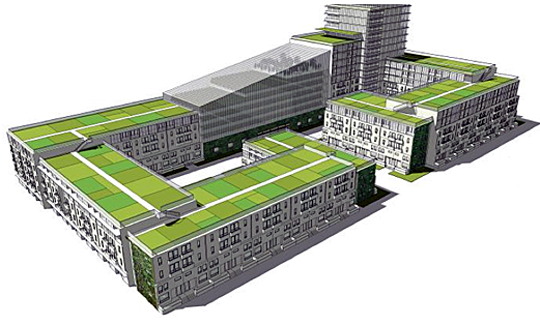
Dr. Despommier's solution is to utilize skyscrapers to grow food hydroponically in the middle of cities. According to Dr. Despommier, the vertical farm has a number of advantages over traditional agricultural methods used currently worldwide.

1. Year-round crop production. By growing crops inside controlled environments, crop production is not dependent upon the seasons. Instead of one season of tomatoes, staggered planted tomatoes can be harvested year round.

2. No Weather-related Crop Failures. By growing foods in controlled environments; droughts, floods, hurricanes, tornadoes and other natural phenomena are irrelevant. 

3. New Employment Opportunities. When farming exists in a skyscraper there are plenty of job opportunities created in the cities. In the Vertical Farm, the crops exist in all of these stages all the time, necessitating the need for labour.

4. No Agricultural Runoff. "According to the USDA, Agricultural nonpoint source pollution is the primary cause of pollution in the U.S." - The Vertical Farm. By growing hydroponically in a controlled environment, these toxic chemicals are essentially unnecessary.

5. Allowance for Ecosystem Restoration. By moving agriculture into city skyscrapers, Dr. Despommier argues traditional agriculture won't be necessary and the land can be turned back over to nature for recovery.

6. Animal Feed from Post-harvest Plant Material. You don't eat all parts of a plant and what is leftover can be used as animal feed.

7. No Use of Pesticides, Herbicides, or Fertilizers. Guess what? There are no weeds to pull in hydroponic/aeroponic/aquaponic systems! So there's no water pollution caused by this method of farming.

8. Use of 70-95 percent less water. According to The Vertical Farm, "Today, traditional agriculture uses around 70 percent of all the available freshwater on earth, and in doing so pollutes it." Of all the benefits on this list, this is the most important of them all.

9. Purification of Grey Water to Drinking Water. Grey water reclamation will become an even hotter topic as the scarcity of clean water becomes more desperate. Plants provide a natural (bio) filtration process that can cleans the water.

10. Greatly reduced food miles. A common argument for alternative farming is that the average distance food travels from farm to table is 1500 miles, on average. The Vertical Farm proposes growing food in the centre of cities, drastically cutting this distance down.

11. More Control of Food Safety and Security. The Vertical Farm is designed using the same equipment hospitals use in intensive care units to prevent pathogens and pests from affecting the crops. Security is proposed to prevent people from sabotaging the environment produced.

credit to OHIO AQUAPONICS

11 June 2012

Aquaponics and Worms

Credit to Vermiaquaponics article by Great Lakes Aquaponics
http://greatlakesaquaponics.wikispaces.com/Vermiaquaponics

How to Breed Worms for Fishing thumbnail


Vermiaquaponics is actually a word my father and I invented. It is in laymans terms the same thing as aquaponics but with a combination of worm breeding. You use the worm castings to make a nutrient tea which is then used to feed the plants through their roots directly and in the form of foliar feeding. Foliar feeding is when you feed a plant through its leaves. You spray the tea onto the leaves directly and the goal is to have the nutrients be absorbed in more than one way. Then the worms themselves are used to feed the fish thus eliminating some of the cost of fish feed, and making these aquaponic systems more self sustainable.

Vermiaquaponics will soon become the future of aquaponics. In a way many people use certain aspects of it by feeding their plants with extra micronutrients and such.(for example chelated iron, manganese, zinc, etc) But what makes this version so unique is that it will help eliminate the cost of fish feed which becomes an enormous expense. In addition you are feeding your fish great protein which should theoretically help them to grow faster and bigger. Although worms do not give fish 100% of their diet, and are nearly 90% composed of water, so supplements will be required. So essentially your getting your fish wish less cost improving your profit. 


One concern I have about this new form of growing is when it gets to the commercial scale. Places like the University of the Virgin Islands are harvesting over 5 tons of fish annually and in order for something like this to be beneficial to them you would need a very vast number of worms. Making vermiaquaponics less practical on a commercial scale but definately beneficial on the hobby scale. Something to consider if trying to convert from aquaponics to vermiaquaponics is that you will need the space to grow your worms, and to make sure you will have enough worms to be able to integrate this technology into aquaponics.

The focus on vermiaquaponics is to not incorporate it in systems producing such high quantities of fish. For the Urban Farmer, primary focus should be on plant growth in order to make profit. Using as little fish as possible and supplementing with tea will reduce other costs. The key is to get the right number of fish to plant growth ratio and also adding the vermiaquaponics side of the equation. When all these numbers can be worked out maximum plant growth to cost can be achieved giving you maximum profit.

15 May 2012

Aquaponics News #2


Newsletter from Nelson Pade's Aquaponics Technology, System and Supplies
New Incentive Program for Workshop Attendees
An incentive program is now available that rewards attendees of Nelson and Pade, Inc.'s 3-day Aquaponics and Controlled Environment Workshop with a discount on the purchase of Clear Flow Aquaponic Systems®. Beginning with the April, 2012, 3-day Aquaponics and Controlled Environment Workshop, each attendee will receive a certificate (good for 30 days after the workshop) that gives them a substantial discount on the purchase of a Clear Flow Aquaponic System from Nelson and Pade, Inc.

2012 Workshop Schedule

nelson and pade inc workshop


Nelson and Pade, Inc. has posted the 2012 workshop schedule.  When you attend a Nelson and Pade, Inc. workshop, you will be presented information based on 20+ years of experience in the three critical areas: aquaponics, controlled environment agriculture and the economics of aquaponics. No matter what your application, understanding these three areas is critical to your success.  Learn from the best!  Attend a Nelson and Pade, Inc. Workshop. Next workshop:  April 19-21, 2012

Clear Flow Aquaponic Systems®

clear flow aquaponic systems


Clear Flow Aquaponic Systems® are designed for maximum production with minimum inputs.  From the F5 (Fantastically Fun Fresh Food Factory) to our commercial systems, these are highly productive and efficient systems.  Check out our current projects to see where Clear Flow Aquaponic Systems® are now being shipped.

UWSP/Nelson and Pade Aquaponics Course
The Introduction to Aquaponics Course/Biology 498, offered in partnership with Nelson and Pade, Inc. and University of Wisconsin-Stevens Point has begun.  This course, co-developed and co-taught by Rebecca Nelson, John Pade, and Dr. Chris Hartleb, is the first of its kind.  The Spring semester course is full, but future course offerings will be announced.

Sweet Corn in March? Yes!


Our demonstration greenhouse is thriving and we are enjoying an abundance of fresh vegetables and fish.  This week, we ate aquaponically-grown sweet corn, kohlrabi, Swiss chard, lettuce, herbs, beans and huckleberries.  In a couple of weeks, our tomatoes and strawberries will be ripe.  We can’t wait!

Questions?
Feel free to email or call us with questions:
608-297-8708
info@aquaponics.com
Or visit our Aquaponics Information pages.

24 April 2012

Aquaponics Presentation #2


BALANCING AN AQUAPONICS SYSTEM

There are several items that needs balancing in an aquaponics system 

1. Nitrate level ~ high: Nitrogen-eating bacteria converts Ammonia to Nitrate

2. Water pH level ~ 7.0 optimum 
3. Sodium salts concentration ~ low 
4. Iron (Fe) addition 
5. Fish feed 
   

BENEFITS OF AN AQUAPONICS SYSTEM
 
There are a lot of benefits of managing an aquaponics system, such as:

1. Conservation through constant water reuse and recycling 
2. Organic fertilization of plants with natural fish emulsion 
3. The elimination of solid waste disposal from intensive aquaculture 


4. The reduction of needed cropland to produce vegetable crops 
5. The overall reduction of environmental footprint for crop production 
6. Small efficient commercial installations can be built close to markets therefore reducing food miles


7. Small systems are easily setup and operated; thus everybody can try 
8. If many people in our country starts their own small aquaponics system at home;
            a) sell surplus harvest, good side-income source 
            b) use fresh food daily, increase in overall health 


Besides all the benefits and profits, one should be aware of its disadvantages, such as:
1. Initial expense to start an aquaponic project
2.The infinite number of ways to configure
3. Rely heavily on energy, technology & control
4. Have multiple 'single points of failure' where problems can lead to
complete loss of fish stock


***presentation continues into #3, refer older post***