Showing posts with label concept. Show all posts

19 February 2014

Home garden, Home aquaponics

credit to http://quantitativemetathesis.blogspot.com/


Aquaponics Is the Next Generation Name for House Garden

We have all observed of veggie plants, kitchen landscapes and bought clean vegetables from the grocer's shops and observed about The Lawn of Arden. At some point of life most of us might have used veggie agriculture, be it in the property garden or portable pots but I think most of us have not tried Aquaponics yet. Aquaponics is a recent innovation in the field of agriculture and shall become another name for home landscapes in the days to come.


What is Aquaponics?

Aquaponics is the combination of hydroponics and aquaculture. Hydroponics is the method of growing vegetation in h2o or sand without the use of ground. Aquaculture is the agriculture of seafood. Aquaponics is the farming of both vegetation and seafood part by part. Fish is kept in an fish tank. The h2o made up of the toxic release by the seafood is sent to the hydroponic program through a pipe, where the vegetation utilize it to obtain their meals. The h2o becomes free from toxics and is sent returning to the aquaculture program.


Vegetables can be expanded in multiplexes

All types of clean vegetables flourish in the Aquaponics program. Cucumber green beans, clothes or chili peppers any veggie can be expanded inside your house. Aquaponics can be used both, outdoors or in the house. No area is needed and this decreases the cost significantly especially, in cities and places where area for agriculture is hardly available. People living in multiplexes can also grow their clean vegetables.
Aquaponics gives you clean and natural vegetables

Since the vegetation obtain their nutritional value from the seafood fertilizer, no substances or bug sprays are needed. This means you get clean and natural veggie for your your meal. You do not need to pay high costs or even visit the Grocery stores store. These self produced clean vegetables involve no appearance, rating, marketing and marketing, which are the reasons for the rise in the costs of products in shops.


Saves h2o efforts and energy

All you need is a continuous supply of meals for the seafood. Difficult and time consuming washing of the fish tank is also reduced. The vegetation obtain the nutritional value from the h2o containing the natural waste of the seafood. Most of the washing is done by the vegetation. The h2o becomes clean and is supplied returning to the fish tank. It helps you to save a lot of h2o too.


Easy accessibility to packages of different sizes

Aquaponics kit can be easily bought from plant centers, agriculture shops or via internet. Kits are available in different dimensions from huge tanks, to be used in verandas or mini ones for indoor preparations. The blooming bed too can be a huge tank or just a huge pail. Other necessary equipment is provided in the kit along with related information and training.


Relaxation of mind

Aquaponics gives an ultimate experience of staying close to nature in the grouped and disorderly places. The joy of eating self-cultivated meals is tremendous and no exotic supper at any cafe could ever meet it. It makes a relaxing green environment and gives pleasure to the brain. It can prove to be a treatment for many illnesses which owe their birth to stress and extremely stress.

12 February 2014

Aquaponics Garden in your house - AquaLibrium


The Aqualibrium Garden is an indoor ecosystem designed to grow fresh herbs, vegetables, and flowering plants in any home.


  • Aquaponic and Hydroponic Gardening
  • Food Grade, BPA-Free Plastic
  • Adjustable for Larger Plants (e.g. Tomatoes)
  • Snap-on Aquarium Window Covers and LED Grow Lights Included
  • Beautiful Clear Design
  • Aquaponic/Hydroponic Instruction Manual Provided


Plants require nutrients to grow. Aquaponics uses a closed loop ecosystem composed of a fish tank and a garden. The fish produce the nutrients that are cycled up to feed the garden. The plant roots then act as a bio-filter by soaking up nutrients. Finally, the water is cycled back down to the aquarium, fresh and clean for the fish. 


All that is needed to grow peppers, kale and eggplants in your Aqualibrium Garden is a few small fish from your local pet store. The Aqualibrium Garden can also be used as a hydroponic system. Hydroponic gardening allows you to use pre-bottled nutrients instead of fish. Sprinkle nutrients in the bottom portion of the Aqualibrium Garden a few times a week and you will have a fresh herbs and flowers in no time!


http://www.aqualibrium.com/
  

22 October 2013

What food can be grown in Aquaponics

PLANTS
credit to Endless Food Systems


Naturally, different plants grow under different conditions. Before you get started growing, it’s important to consider which type of growing bed to use. This is determined by the type of root structure that plant tends to have. Plants with no root structure need floating beds, while root vegetables grow better in wicking beds. Most everything else grows best in media beds. 

For plants like lettuce, herbs or leafy greens, floating “raft” style beds are ideal. For root vegetables, wicking beds are a better choice. If you plan to grow tomatoes, peppers, beans or most other types of multiple yield plants, media beds are probably your best option.

Choosing the right environment in which to place your aquaponics farm is another important consideration. The amount of sunlight, ambient temperature, rainfall and wind are all crucial factors in producing a healthy plant. If you decide to grow outdoors, choose varieties of vegetables that will grow best in your climate. In addition, most areas will require the use of a greenhouse, or you can always grow indoors.

It is best to avoid fighting Mother Nature. Even with a greenhouse, it is difficult to control the temperature, and plants thrive better when the temperature ranges match their normal processes. Therefore, in the colder months you should grow cold-weather crops and in the summer, you should grow your warm-weather plants.

It’s important to carefully schedule your planting times. If you’re looking to produce a sustained food supply, you should stagger your projected harvests so that all of your produce doesn’t become ripe at one time. This can lead to wasted food, as well as in-between periods where your aquaponics garden isn’t producing any vegetables. If you plan to grow multiples of the same vegetable, try to stagger growing periods by approximately the amount of time it will take you to consume a batch.

If you are aiming for more variety in your diet, try overlapping the growing times of three or more vegetable types. It can take a while to fine-tune this process to match your own consumption and the decomposition rates of your already picked vegetables. To err on the side of overproduction is never a bad idea, as you can easily donate excess vegetables, share them with friends or preserve them for later by freezing, dehydrating or canning. 

One of the quickest-yield vegetables you can get out of an aquaponics system is lettuce. Reaching peak maturity at around 28 days, lettuce grows ideally in floating beds. It is very forgiving in terms of the minimum and maximum water temperatures and can survive a range from 25-85 degrees Fahrenheit. 

If you’re looking to produce a more nutritious food in a short amount of time, pole, an Italian-style wax bean, can be harvested in around 54 days. Pole grows best in a media bed and is optimal at temperatures between 59 and 95 degrees Fahrenheit. Beans overall are an excellent investment, as they can be dried and stored for very long periods of time. 

Tomatoes are well worth the wait, taking around three months to reach peak maturity depending on the strain and variety. Like beans, they grow best in a media bed at a temperature of 59-95 degrees Fahrenheit. In order to ensure the highest yield from your tomato plants, be sure to trim off all shoots, leaving just the main vine. This will ensure that the bulk of the plant’s nutrients are delivered to the tomatoes once they begin to form. 

In about 65 days, you can have a full harvest of delicious carrots. They have a very well defined optimal growing temperature, at between 59 and 64 degrees Fahrenheit, although they are capable of growing in extreme temperatures in both directions. Wicking beds provide the perfect growing environment for carrots and other root vegetables.

With an aquaponics system, your ability to grow edible plants is limited only by your own desire to do so. The system does most of the labor that would be required of you in an ordinary in-ground growing operation, so you can spend your time on more pressing issues like scheduling harvests and finding new and interesting applications for your crops. When done correctly, you should be able to maintain a constantly rotating supply of organic, pesticide-free vegetables that can carry on indefinitely in a properly maintained system. 


FISH
credit to Backyard Aquaponics


There are many different species of fish that can be used in an aquaponic system, depending on your local climates and available supplies. Our local climate in Perth, Western Australia, allows us to keep Rainbow Trout through winter, then a warmer species like Barramundi during summer. There are also a few choices for year round fish that we could grow, but they often take a longer time to mature. If you live in a cooler climate you might be looking at growing Trout all year round, or perhaps another locally produced fish species. In warmer areas of Australia people generally grow Barramundi, or Jade Perch year round, in most warm areas throughout the world Tilapia is the fish of choice.

In deciding what is the best species for you to grow, you should take a few factors into account, most importantly is what you want from your system. If you don’t want to eat your fish then you probably won’t want to grow edible fish, or you may want to grow an edible fish that can live year-round in your area, so that you’re not having to harvest fish out seasonally. The second most important factor is ‘What’s available?’ You need to be able to buy fish to stock your system, even with species such as Tilapia that breed readily, you need to get your broodstock in the first place.

Here’s a list of useful aquaponic species with a few details about each

Barramundi: Barramundi are often grown in aquaponic systems through the warmer months of the year. Most growers will buy fairly mature stock so that they can harvest larger fish, at the end of the growing season. Barramundi that is grown in an aquaponic system has an exceptionally clean, crisp taste. Growing your own Barramundi excites guests and is the envy of neighbours. They provide a decent harvest at the end of the season and are one of the more majestic species of edible fish.

Catfish: There are many different species of catfish around the world that are well suited to aquaponics. Channel catfish are the most widely farmed aquaculture species in the United States, and they are available in many areas of Australia. Catfish don’t have scales so they need to be skinned, they are quick growing and have a good food conversion ratio.

Carp: There are many species of carp that could be very well suited to aquaponics, unfortunately because of their reproductive capabilities, their tough nature and ability to readily adapt in many areas of the world, carp have become noxious pests to native waterways and the environment, and as such they are not easily obtainable, and often there are high fines and fees for keeping them. In most western cultures carp also have a fairly poor reputation, as an eating fish, however, carp is still the most widely cultured fish in the world as it’s grown throughout most of Asia.

Goldfish: Although some people may group these with the carp, I’ve decided to cover these seperately as most people refer to them as goldfish, and this is what they will be sold as, at local pet shops or fish suppliers. Goldfish are generally pretty tough and make a great addition to an aquaponic system. In many areas they will breed in a tank, although they generally need plant cover within the tank to breed.

Jade Perch: This Australian fish is worth a special mention here, as it has the highest levels of omega three oils of any fish species in the world. In fact it’s so high in omega three oils that growers are trying to breed the oil out of them, they are trying to breed a less oily fish because they’ve found people don’t like the high oil content. They require warm water and consume an omnivorous diet. Very well suited to an aquaponic system, they grow quickly and fingerlings are readily available in warmer areas.

Koi: Once again, another species of carp, but better known as “Koi” rather than carp. Koi are very common within many Asian communities and they are often found in large ornamental ponds. For those who love Koi, an aquaponic system is a great proposition for stocking the fish.

Murray cod: Murray cod are a magnificent native Australian fish, known to grow to enormous sizes in their native habitats, their tank culture is still in reasonably early days. Murray cod are grown in recirculating aquaculture systems, and can also been grown in aquaponic systems, hopefully this fish will be utilised more over time because they are quick growing, and a great eating fish. One of the downfalls is that they must be kept at high stocking densities, and kept well fed otherwise they cannibalise each other.

Silver perch: Silver perch are a good allround native Australian fish that grow well under a variety of conditions. Perch are omnivorous and will happily eat green scraps as well as Duckweed and Azolla. They grow within a wide temperature range, though they’re not as fast growing as many other fish, taking 12-18 months for fingerlings to grow to plate size.

Tilapia: The second most cultured fish in the world, and extremely popular in Aquaponics systems. They are an ideal species for aquaponics for many reasons. They are easy to breed, fast growing, withstand very poor water conditions, consume an omnivorous diet and are good eating. The only downfall for some people will be that Tilapia require warm water. If you live in a cool area you are far better off growing a fish species that will grow well in your temperature range, rather than trying to heat the water. Tilapia are also a declared pest in many areas.

Trout: Trout are a great fish for aquaponic systems where water temperatures are a little cooler. Trout prefer water temperatures between 10°C and 20°C. They have extremely fast growth rates and excellent food conversion ratios.

Others: There are other fish species which are quite suitable for aquaponics, that might be available in your local area. In Europe many different species of carp are grown, within the United States such species as Bluegill are often available, while in Australia we also have a number of other native species like Sleepy cod which would be suitable.

Other aquatic animals that can be incorporated into an aquaponic system are fresh water mussles, fresh water prawns, and fresh water crayfish. Mussles are a filter-feeder, and do a great job of helping to clean the water, they will happily grow in flooded grow beds, or can be incorporated into fish tanks. Crustaceans make a nice addition to an aquaponic system and there are a few different species available depending on your location and water temperatures.

For those in tropical areas there’s Redclaw, a fast growing  Australian species, and for those in cooler areas there’s Yabbies or Marron.

Yabbies breed readily, given the right environment and the correct water temperature, as well as long daylight hours. They also grow fairly quickly, but they can be prone to fighting and cannibalism when stocked very densely.


20 October 2013

Aquaponics' Applications [1]


Educational Applications of Aquaponics
credit to Nelson Pade website


Aquaponics and hydroponics are both excellent means of demonstrating many principles of science, agriculture, math and business in all grade levels and for home schooling. Applications of these technologies are only limited by ones imagination.


A unit in hydroponics or aquaponics enforces practical uses of chemistry, mathematics, physics, economics and engineering. The monitoring and care of a hydroponic or aquaponic system by students helps instill a sense of responsibility, inspires creativity and creates excitement in the learning environment.


A small aquaponic garden can sit on a counter top and be used to demonstrate botany, horticulture, hydroponics (soil less plant culture), plant science, nutrition, physiology and care, nutrient and pH testing, pH relationships, plant usage of nutrients, seed germination, photosynthesis and light and plant development.


An aquaponic system combines hydroponics with aquaculture in a recirculating system. In addition to the plant sciences, aquaponics incorporates and demonstrates many of natures natural cycles, nitrification, biology, fish anatomy and nutrition and high-tech agriculture.


A unit in hydroponics or aquaponics can be started at the beginning of a semester and run through the entire semester, allowing the educator to present the individual concepts and lessons as the plants and fish develop and grow. A small hydroponic or aquaponic system can sit on a spare counter top. Larger systems can be placed on the floor of a classroom, in a windowsill or a greenhouse.
  

08 October 2013

Different Types of Aquaponics Systems


There are three different types of aquaponics systems that have been developed for use by home gardeners and commercial enterprises. These are media based, NFT and Deep Flow or Raft systems and here is a description of each one.


Media-based: also known as the gravel bed system, the media-based aquaponics system is the simplest type to set up and can be used on a small or large scale. This is why it is the type most commonly used by backyard aquaponics enthusiasts. Containers are filled with small rocks, usually expanded clay pebbles which are porous to absorb water and air, and then seedlings are planted directly into these. Water from the fish tank is circulated through the container to allow the plants to access the nutrients. The rocks act as a biological filter as well as a solids filter, eliminating the need for extra equipment.

You can also use special netted growing pots for your seeds or seedlings. You fill these with perlite, coir, peat moss or the clay pebbles and plant into them. These pots are then placed into a larger container which has been filled with the expanding clay pebbles, making sure the netted sides are covered by the media. Media-based aquaponics systems hold plants firmly and so are ideal for growing fruiting plants.

There are two different ways this type of aquaponics system can be operated. The first method pumps a continuous flow of water through the media bed from the fish tank and back into the tank. The second is a process called flood and drain or ebb and flow, where water is pumped into the bed to a depth of about 10 to 12 inches (20 to 30 cms) and then drained away. A timer controls the flooding and draining sequence.


NFT system: or Nutrient Film Technique is a common method used in hydroponics that is best suited to a large-scale aquaponics production. This is because of the expense of setting up the system of PVC pipes and mechanical filtration needed to operate the system. Because there is not the surface area exposed to the air, as in the media-based system, a biological filter is needed to allow the beneficial bacteria to develop and convert the fish wastes into plant nutrients. Solids filtration is also needed to deal with the solids in the fish waste; this is usually set up in a separate tank through which the water passes before going through the plant pipes.

In the NFT system, plants are held in netted growing pots which are suspended through holes cut in the pipe. A thin film of nutrient-rich water is run along the bottom of enclosed gutters so that the roots can reach it. It is really only suited to plants that have a small root systems, such as leafy green vegetables.


Deep Flow: also called Deep Water Culture (DWC) or the Raft system, this is another commonly-used method in hydroponics. This system involves the use of a foam ‘raft’ that floats on top of the water. It is a popular choice for both commercial and backyard aquaponics because it is relatively cheap to set up and operate.

A container or channel is used to hold the water as it is pumped through from the fish tank, after it has been filtered to remove any solid waste. Plants are held in holes made in the raft, so their roots dangle down into the water. This method uses high volumes of water which provides stable water temperatures for the plants and fish. It is the method most often used in commercial aquaponics operations because of the ease with which the plants can be tended and harvested. Again, it is better suited to growing herbs and leafy green vegetables than plants with bigger root systems and fruiting varieties.

This type of system can easily be adapted for home garden use by simply floating a styrofoam tray on top of a fish tank. Just cut holes in the tray and suspend the plants, or plants in netting pots, through the holes so the roots are in contact with the water. Choose fish varieties that are not voracious plant eaters to avoid having plants’ roots eaten away.

Now that you understand how each of the 3 types of aquaponics systems operates, you will be in a better position to decide which one suits you the best. Whichever method you choose, it is best to start small so you can gradually build your expertise and experience before setting up a large system.


02 July 2013

Aquaponics' Origin


Aquaponics, with its fancy name, may sound like a trendy new concept developed by environmentalists. But it's actually as old as the hills.


The origins of aquaponics can be traced to ancient Egyptian and Aztec cultures.


The ancient Aztecs developed chinampas, man-made floating islands, which consisted of rectangular areas of fertile land on lake beds.


Aztecs cultivated maize, squas­h and other plants on the chinampas and fish in the canals surrounding them.


The fish waste settled on the bottom of the canals, and the Aztecs collected the waste to use as fertilizer.


Additionally, countries in the Far East like Thailand and China have long used aquaponic techniques in rice paddies.

08 June 2013

Aquaponics is Organic


Organic Grown Food
http://www.epa.gov/agriculture/torg.html

"Organically grown" food is food grown and processed using no synthetic fertilizers or pesticides. Pesticides derived from natural sources (such as biological pesticides) may be used in producing organically grown food.


Organic Farming
http://en.wikipedia.org/wiki/Organic_farming

Organic farming is a form of agriculture that relies on techniques such as crop rotation, green manure, compost and biological pest control. Organic farming uses fertilizers and pesticides but excludes or strictly limits the use of manufactured (synthetic) fertilizers, pesticides (which include herbicides, insecticides and fungicides), plant growth regulators such as hormones, livestock antibiotics, food additives, genetically modified organisms, human sewage sludge, and nanomaterials.

Organic agricultural methods are internationally regulated and legally enforced by many nations, based in large part on the standards set by the International Federation of Organic Agriculture Movements (IFOAM), an international umbrella organization for organic farming organizations established in 1972. IFOAM defines the overarching goal of organic farming as:

"Organic agriculture is a production system that sustains the health of soils, ecosystems and people. It relies on ecological processes, biodiversity and cycles adapted to local conditions, rather than the use of inputs with adverse effects. Organic agriculture combines tradition, innovation and science to benefit the shared environment and promote fair relationships and a good quality of life for all involved..."
—International Federation of Organic Agriculture Movements


Organic Products 
http://www.ams.usda.gov/AMSv1.0/getfile?dDocName=STELDEV3004446&acct=nopgeninfo

Organic products have strict production and labeling requirements. Unless noted below, organic products must meet the following requirements:
- Produced without excluded methods; genetic engineering, ionizing radiation, or sewage sludge.
- Produced per the National List of Allowed and Prohibited Substances (National List).
- Overseen by a USDA National Organic Program authorized certifying agent,
- Following all USDA organic regulations.

An overview of labeling the various categories of organic products is provided below.
PRINCIPAL DISPLAY PANEL: portion of the package most likely to be seen by customers at the time of purchase.
INFORMATION PANEL: includes ingredient statement (list of ingredients contained in a product, from highest to lowest percentage of final product) and other product information.


100% Organic
Raw or processed agricultural products in the “100 percent organic” category must meet these criteria:
- All ingredients must be certified organic.
- Any processing aids must be organic.
- Product labels must state the name of the certifying agent on the information panel.

An overview of labeling the various categories of 100% organic products is provided below.
PRINCIPAL DISPLAY PANEL: May include USDA organic seal and/or 100 percent organic claim.
INFORMATION PANEL: Must identify organic ingredients (e.g., organic dill) or via asterisk or other mark.


Normal Organic
Raw or processed agricultural products in the “organic” category must meet these criteria:
- All agricultural ingredients must be certified organic, except where specified on National List.
- Non-organic ingredients allowed per National List may be used, up to a combined total of five percent of non-organic content (excluding salt and water).
- Product labels must state the name of the certifying agent on the information panel.

An overview of labeling the various categories of normal organic products is provided below.
PRINCIPAL DISPLAY PANEL: May include USDA organic seal and/or organic claim.
INFORMATION PANEL: Must identify organic ingredients (e.g., organic dill) or via asterisk or other mark.

Organic Certification
http://en.wikipedia.org/wiki/Organic_certification

Organic certification is a certification process for producers of organic food and other organic agricultural products. In general, any business directly involved in food production can be certified, including seed suppliers, farmers, [food] processors, retailers and restaurants.

Requirements vary from country to country, and generally involve a set of production standards for growing, storage, processing, packaging and shipping that include:
  • no human sewage sludge fertilizer used in cultivation of plants or feed of animals
  • avoidance of synthetic chemical inputs not on the National List of Allowed and Prohibited Substances (e.g. fertilizer, pesticides, antibiotics, food additives, etc.), genetically modified organisms, irradiation, and the use of sewage sludge;
  • use of farmland that has been free from prohibited synthetic chemicals for a number of years (often, three or more);
  • keeping detailed written production and sales records (audit trail);
  • maintaining strict physical separation of organic products from non-certified products;
  • undergoing periodic on-site inspections.


06 June 2013

Aqua Vista Topic: Future of Farming #1


Looking at the past and current state of agriculture, we have come to the conclusion that it is failing to provide nutritious foods, it is insufficient to sustain us in the future and the ecological destruction caused my modern farming methods has taken an incredible toll on our planet. 


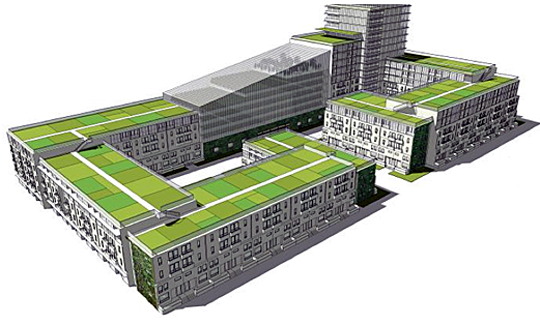
Dr. Despommier's solution is to utilize skyscrapers to grow food hydroponically in the middle of cities. According to Dr. Despommier, the vertical farm has a number of advantages over traditional agricultural methods used currently worldwide.

1. Year-round crop production. By growing crops inside controlled environments, crop production is not dependent upon the seasons. Instead of one season of tomatoes, staggered planted tomatoes can be harvested year round.

2. No Weather-related Crop Failures. By growing foods in controlled environments; droughts, floods, hurricanes, tornadoes and other natural phenomena are irrelevant. 

3. New Employment Opportunities. When farming exists in a skyscraper there are plenty of job opportunities created in the cities. In the Vertical Farm, the crops exist in all of these stages all the time, necessitating the need for labour.

4. No Agricultural Runoff. "According to the USDA, Agricultural nonpoint source pollution is the primary cause of pollution in the U.S." - The Vertical Farm. By growing hydroponically in a controlled environment, these toxic chemicals are essentially unnecessary.

5. Allowance for Ecosystem Restoration. By moving agriculture into city skyscrapers, Dr. Despommier argues traditional agriculture won't be necessary and the land can be turned back over to nature for recovery.

6. Animal Feed from Post-harvest Plant Material. You don't eat all parts of a plant and what is leftover can be used as animal feed.

7. No Use of Pesticides, Herbicides, or Fertilizers. Guess what? There are no weeds to pull in hydroponic/aeroponic/aquaponic systems! So there's no water pollution caused by this method of farming.

8. Use of 70-95 percent less water. According to The Vertical Farm, "Today, traditional agriculture uses around 70 percent of all the available freshwater on earth, and in doing so pollutes it." Of all the benefits on this list, this is the most important of them all.

9. Purification of Grey Water to Drinking Water. Grey water reclamation will become an even hotter topic as the scarcity of clean water becomes more desperate. Plants provide a natural (bio) filtration process that can cleans the water.

10. Greatly reduced food miles. A common argument for alternative farming is that the average distance food travels from farm to table is 1500 miles, on average. The Vertical Farm proposes growing food in the centre of cities, drastically cutting this distance down.

11. More Control of Food Safety and Security. The Vertical Farm is designed using the same equipment hospitals use in intensive care units to prevent pathogens and pests from affecting the crops. Security is proposed to prevent people from sabotaging the environment produced.

credit to OHIO AQUAPONICS

07 October 2012

Aquaponics Trial #2

Hey guys, its been a while.

Here's the second trial I've been doing at my house. Had the first prototype moved out of the shade plus additional 2 pods. Also added a fish tank i acquired from a fish store that's about to move out of town.


Actually these photos here are outdated by 2-3 months, since I've already started to harvest them from August. Anyway, here's a close-up of the pods.


I've been trying a lot of different kinds of vegetable; kailan, lettuce, salad, cabbage, sawi, etc. But the most success I've had so far is the kangkung (water spinach).


The two tanks shown are connected underneath; the right tank receives freshly filtered water from the pods. It has 9-10 lampam fish. The water then travel to the left tank (along with fish faeces), before being pumped to the highest pods to begin the cycle again.


15 May 2012

Aquaponics News #2


Newsletter from Nelson Pade's Aquaponics Technology, System and Supplies
New Incentive Program for Workshop Attendees
An incentive program is now available that rewards attendees of Nelson and Pade, Inc.'s 3-day Aquaponics and Controlled Environment Workshop with a discount on the purchase of Clear Flow Aquaponic Systems®. Beginning with the April, 2012, 3-day Aquaponics and Controlled Environment Workshop, each attendee will receive a certificate (good for 30 days after the workshop) that gives them a substantial discount on the purchase of a Clear Flow Aquaponic System from Nelson and Pade, Inc.

2012 Workshop Schedule

nelson and pade inc workshop


Nelson and Pade, Inc. has posted the 2012 workshop schedule.  When you attend a Nelson and Pade, Inc. workshop, you will be presented information based on 20+ years of experience in the three critical areas: aquaponics, controlled environment agriculture and the economics of aquaponics. No matter what your application, understanding these three areas is critical to your success.  Learn from the best!  Attend a Nelson and Pade, Inc. Workshop. Next workshop:  April 19-21, 2012

Clear Flow Aquaponic Systems®

clear flow aquaponic systems


Clear Flow Aquaponic Systems® are designed for maximum production with minimum inputs.  From the F5 (Fantastically Fun Fresh Food Factory) to our commercial systems, these are highly productive and efficient systems.  Check out our current projects to see where Clear Flow Aquaponic Systems® are now being shipped.

UWSP/Nelson and Pade Aquaponics Course
The Introduction to Aquaponics Course/Biology 498, offered in partnership with Nelson and Pade, Inc. and University of Wisconsin-Stevens Point has begun.  This course, co-developed and co-taught by Rebecca Nelson, John Pade, and Dr. Chris Hartleb, is the first of its kind.  The Spring semester course is full, but future course offerings will be announced.

Sweet Corn in March? Yes!


Our demonstration greenhouse is thriving and we are enjoying an abundance of fresh vegetables and fish.  This week, we ate aquaponically-grown sweet corn, kohlrabi, Swiss chard, lettuce, herbs, beans and huckleberries.  In a couple of weeks, our tomatoes and strawberries will be ripe.  We can’t wait!

Questions?
Feel free to email or call us with questions:
608-297-8708
info@aquaponics.com
Or visit our Aquaponics Information pages.

01 October 2011

Aquaponic Trial #1

Alas, my first trial setup


The view from a distance, tier 1 = koi pod, tier 2 & 3 = flower pod, tier 4 = biofilter pod.

The flower pods below (tier 2 & 3) with seedling starting to grow. It took awhile for them to pop up due to the location of the system under the porch roof which is preventing precious sunlight. Nonetheless, they still grow.


The biofilter pod (tier 4) is located on the topmost of the system, comprises of 4 filter elements with 3 aeration outlets between them. This pod is designed to capture solid fishwaste and dissolves it into elements which the plant then could absorb, such as ferum, potassium, kalium, etc. It is an essential to have this pod as described in the aquaponic cycle below.


The fish pod, basically contains my 3 koi fish and a pump. Since the system is practically new, the fish is quite stressfull and is a bit jumpy. So i didnt manage to take a picture of them, maybe next time, in the next update.

16 September 2011

Aquaponics Design #2

Ok, its been 5 months since my last post. But I've been wanting to post this for a long time. So here goes.


Continuing the 'Concept' topic on which I'll base my system on, here are the findings I got from the net apart from the last post.


The system from University of Virgin Island. One of the first systems I encountered back in 2006. Used as a learning field for Aquaponics study. Too big for me of course, just wanted to share it with u guys.


This would be how that system looks like under the raft. Remember that this is a deep water raft system much like the one I tend to adopt in my trial system at home.


Going back to my previous post, first image. This is the realization of it. Somebody must have build up this system according to that design and made it work. Nice looking system, but still too big for me to try, unfortunately.


Great design to accommodate the vege raft on the fish tank itself. Thus saving space for a more bigger fish population. But having too big fish to vegetable ratio will be problem for this setup I reckon.


Having seen all the design I could search in the net, this one of the smallest and simplest of aquaponics design I've came upon. Suitable in urban area where space is tight while still having all the features of an aquaponics system. I am in the construction phase of my system as of now. A little DIY assembling and I'll be posting my own system in a few days. Stay tuned.